Episodes
How it was made
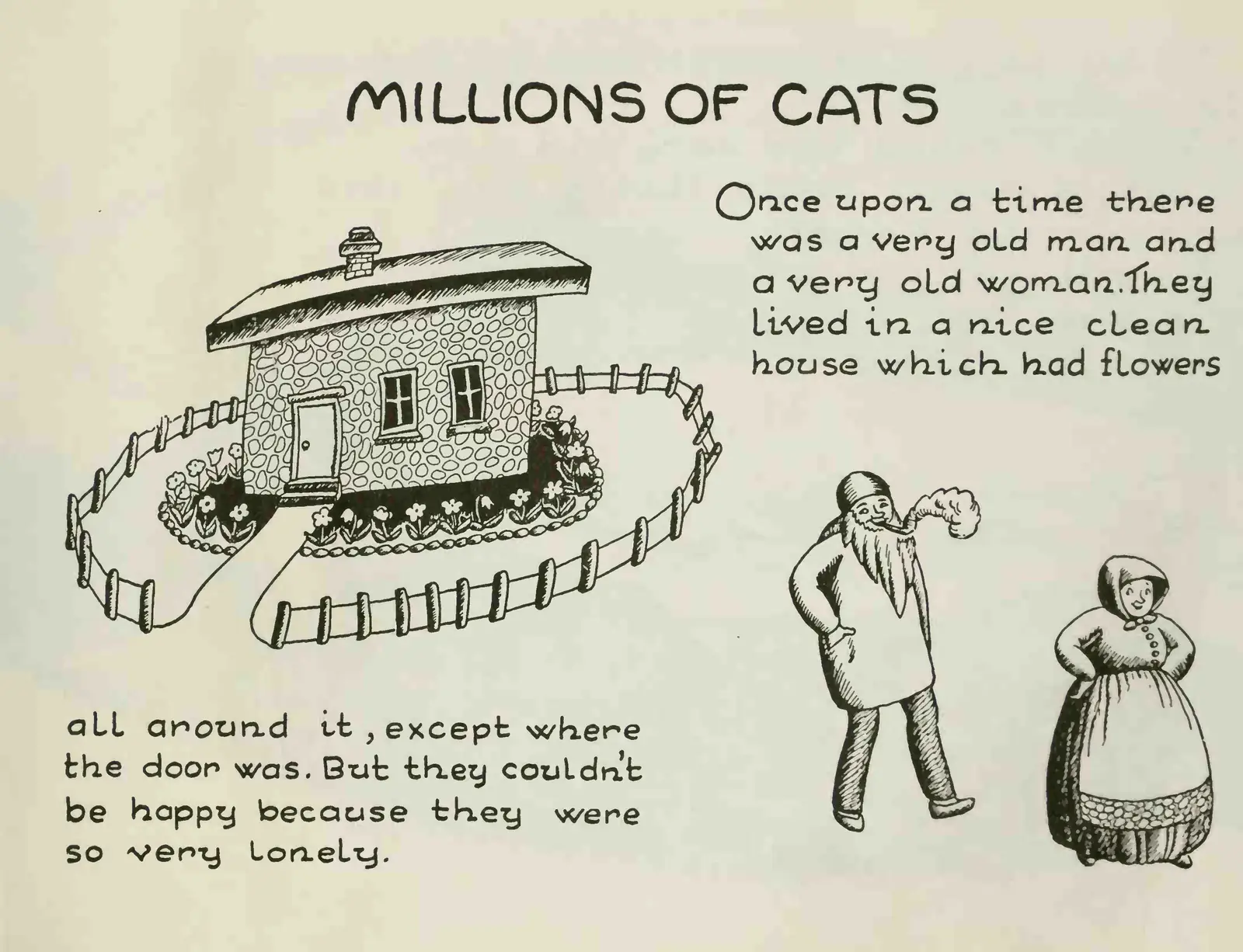
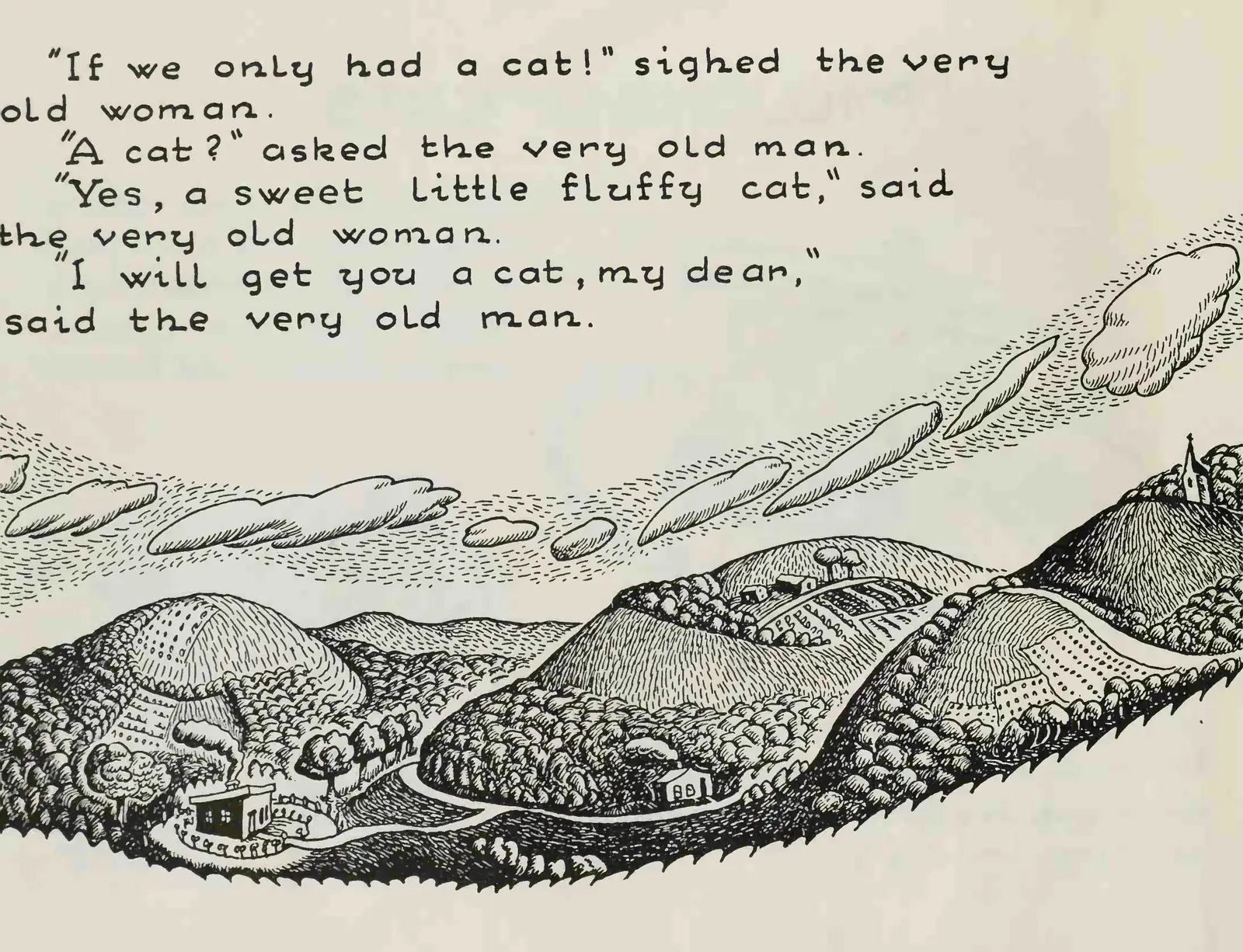
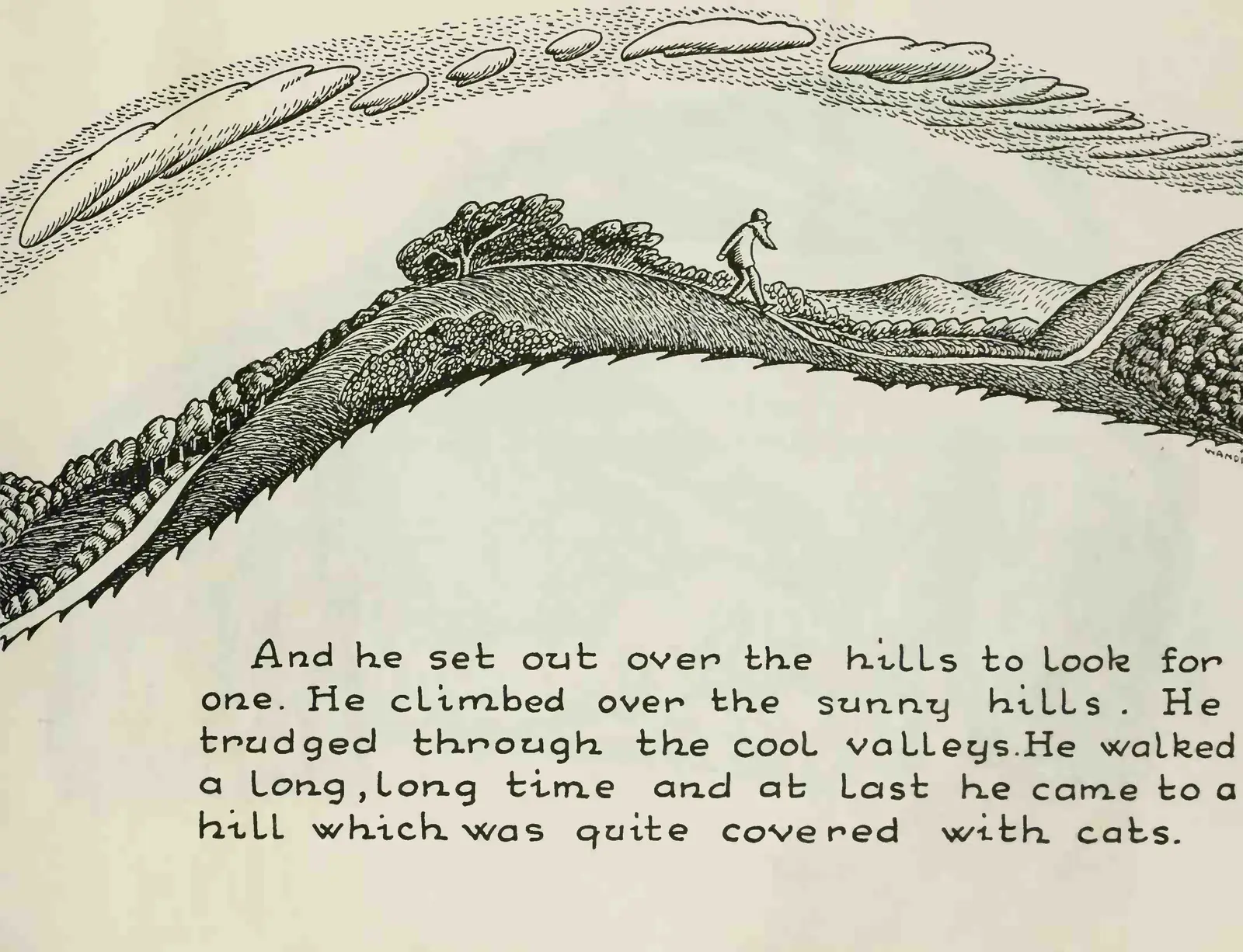
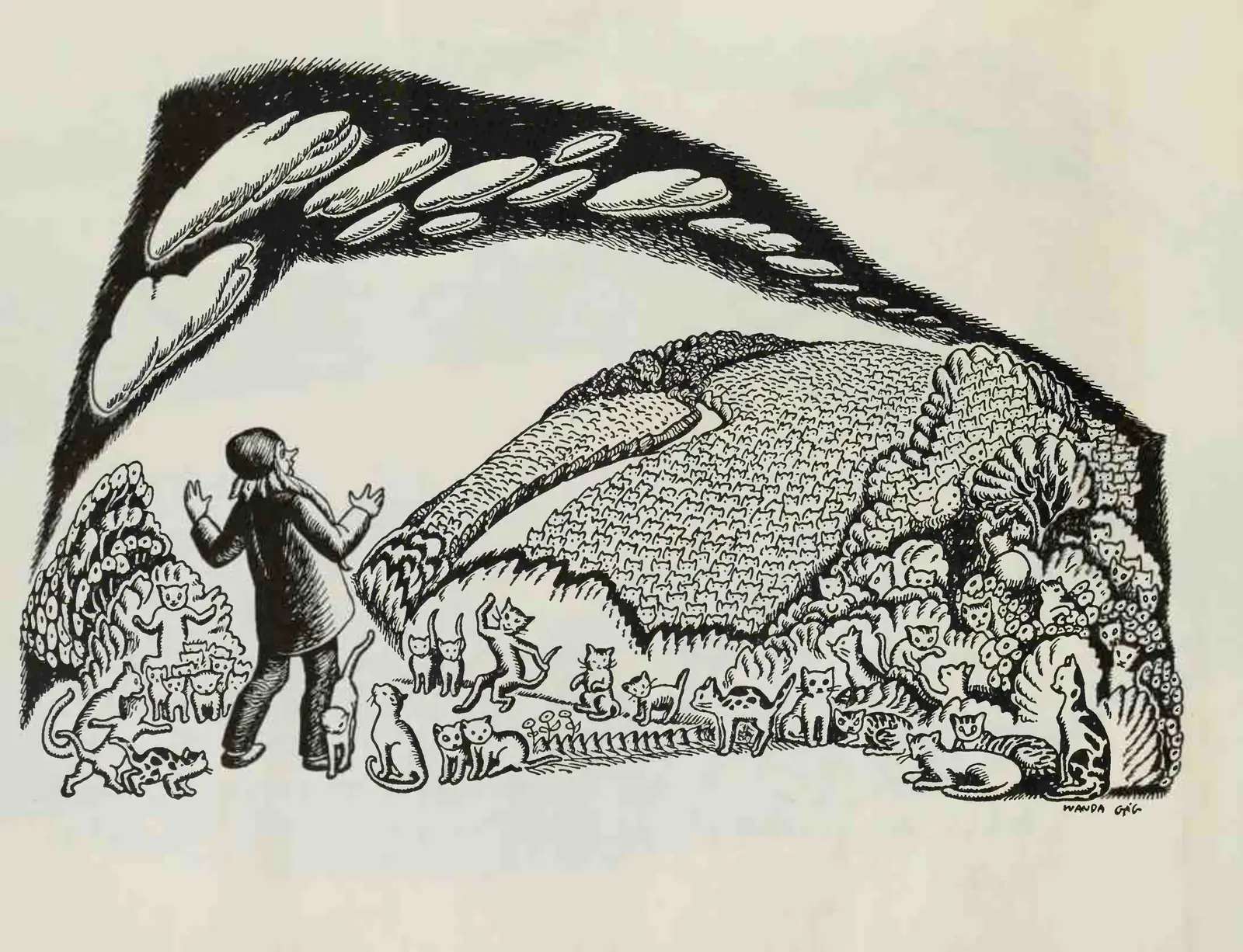
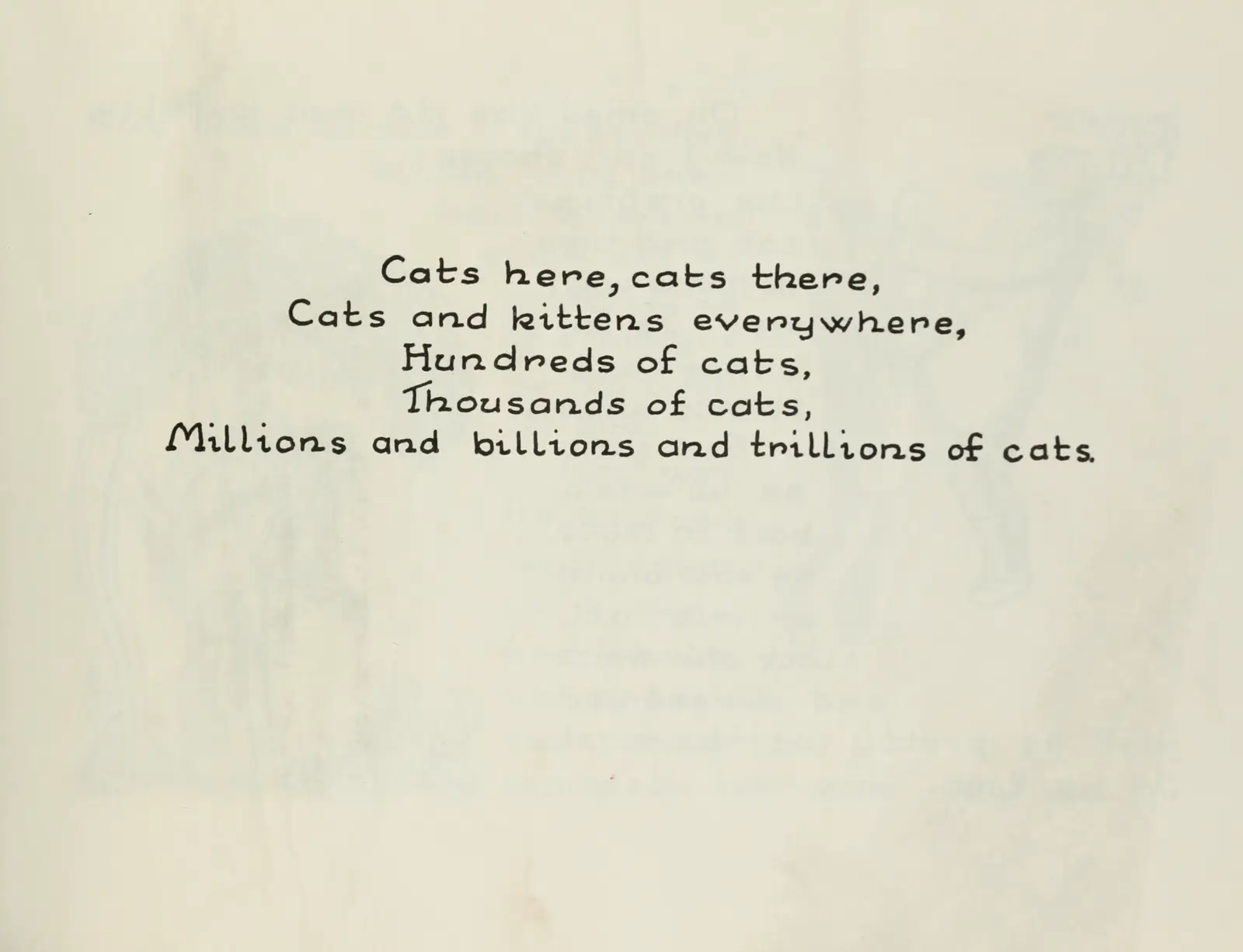
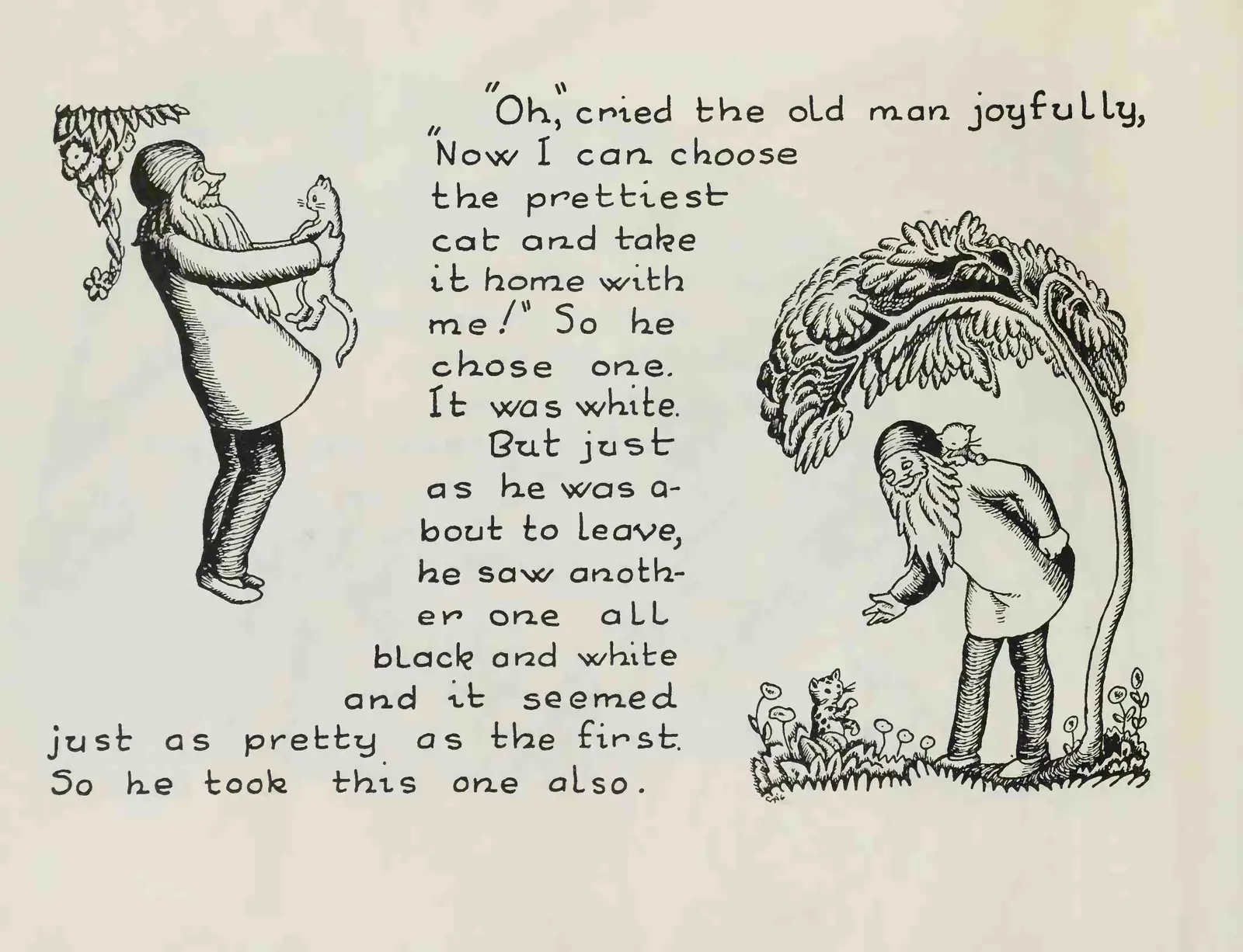
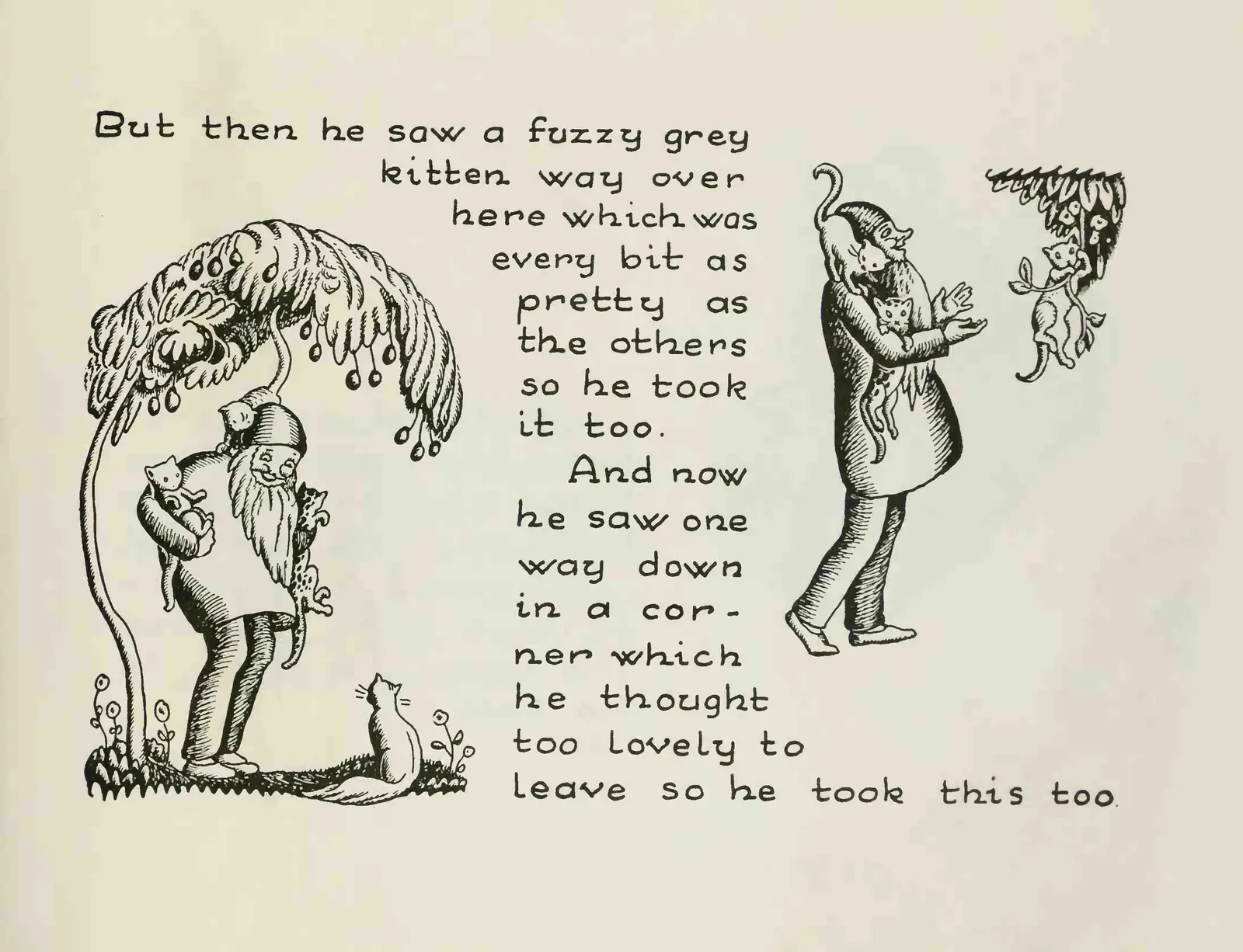
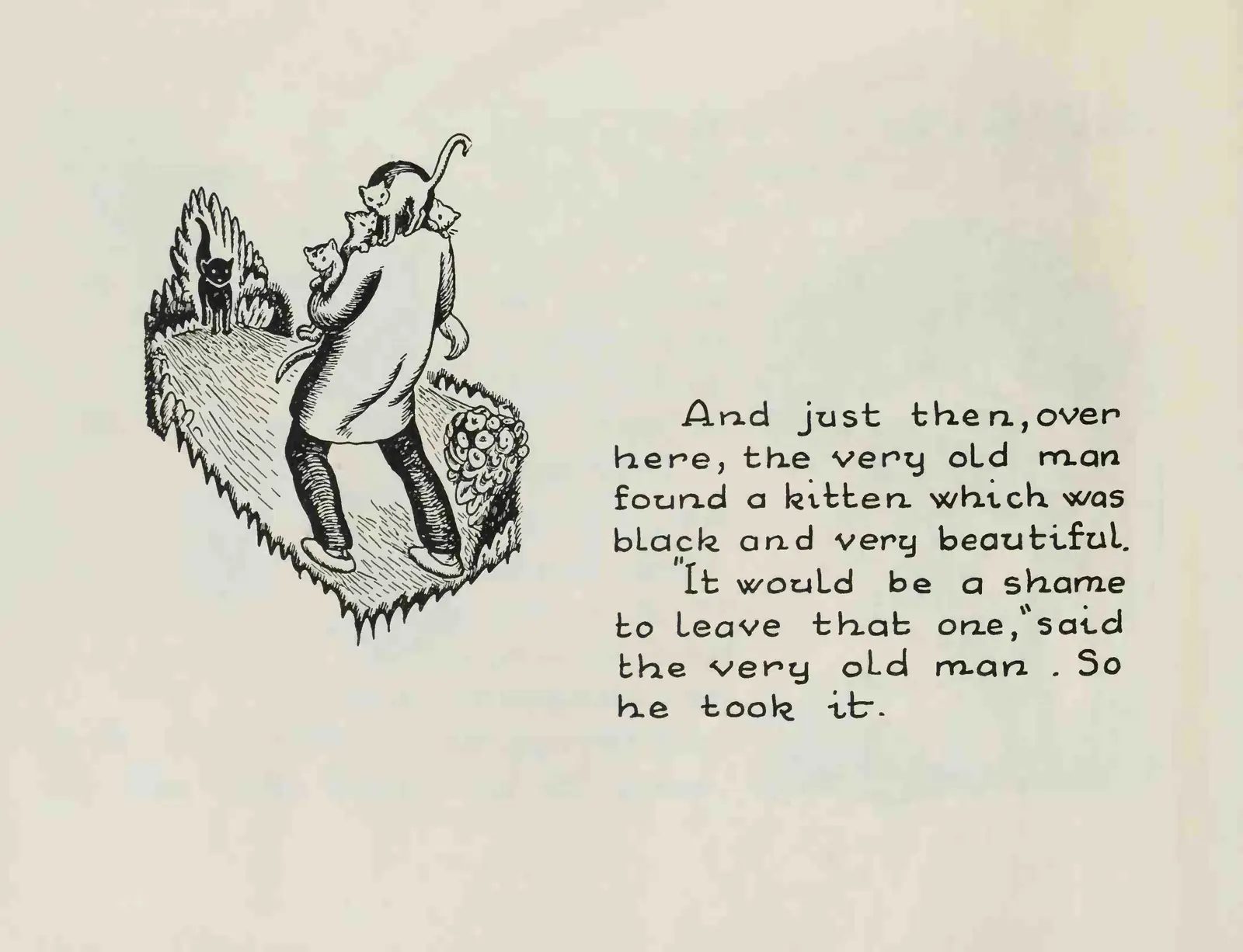
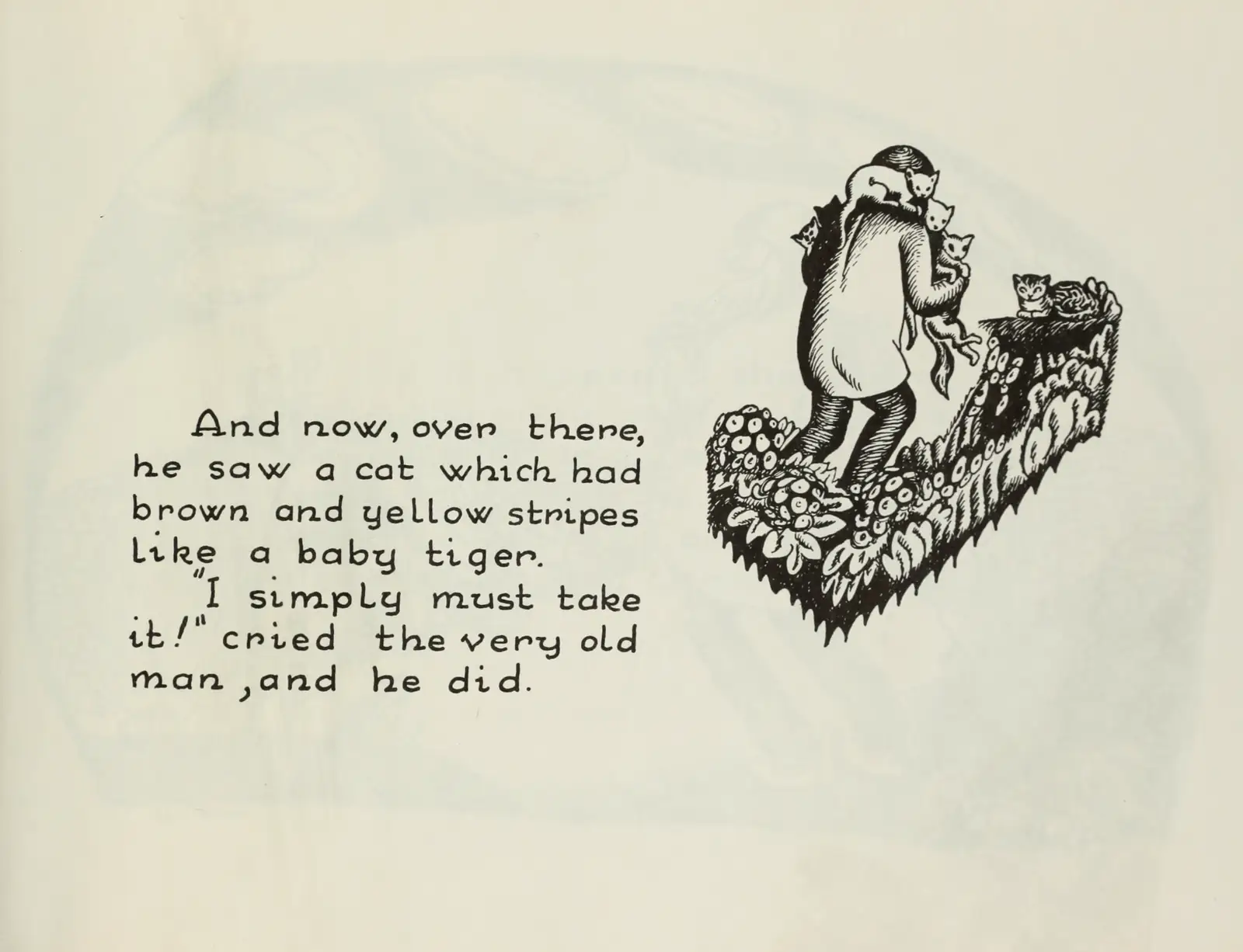
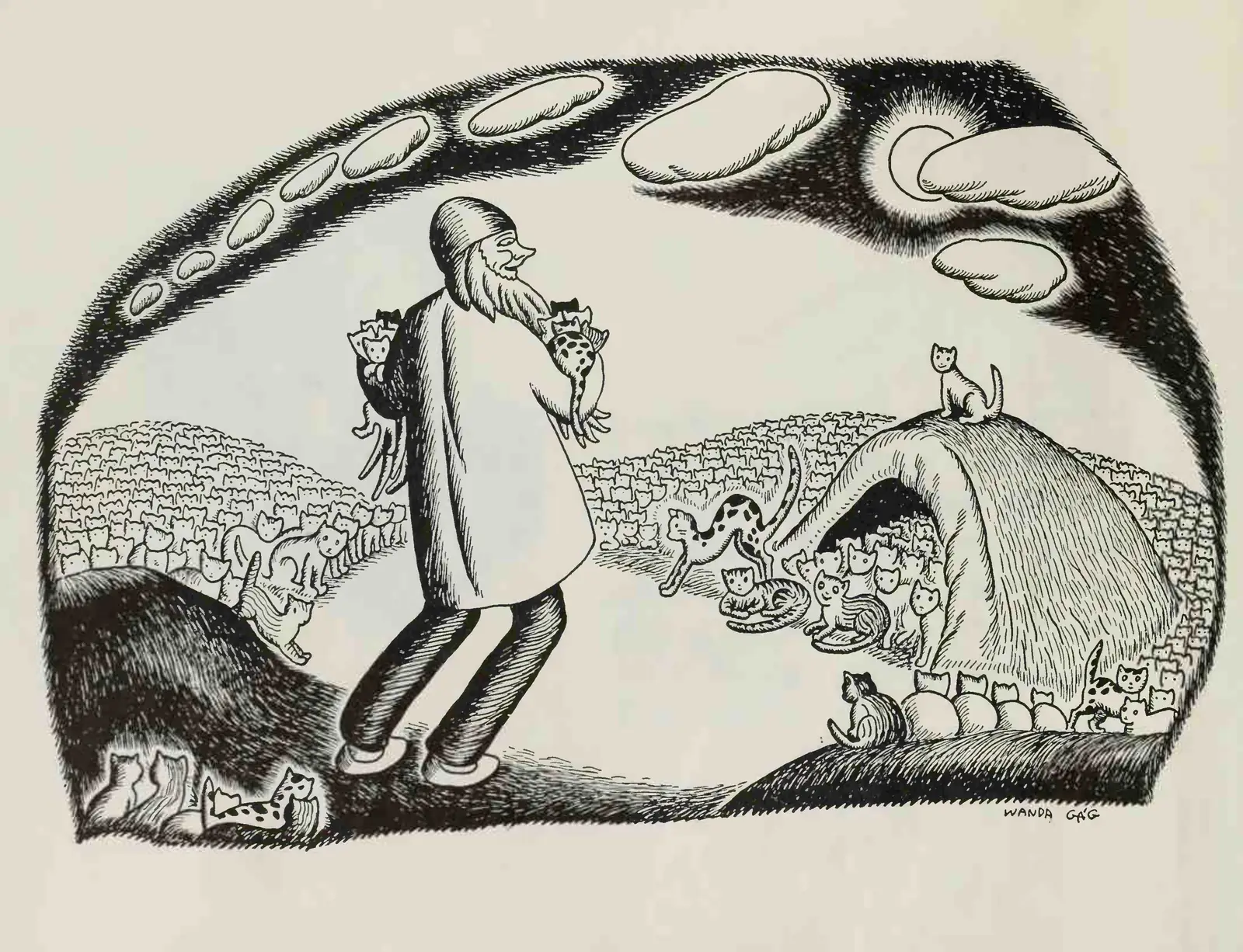
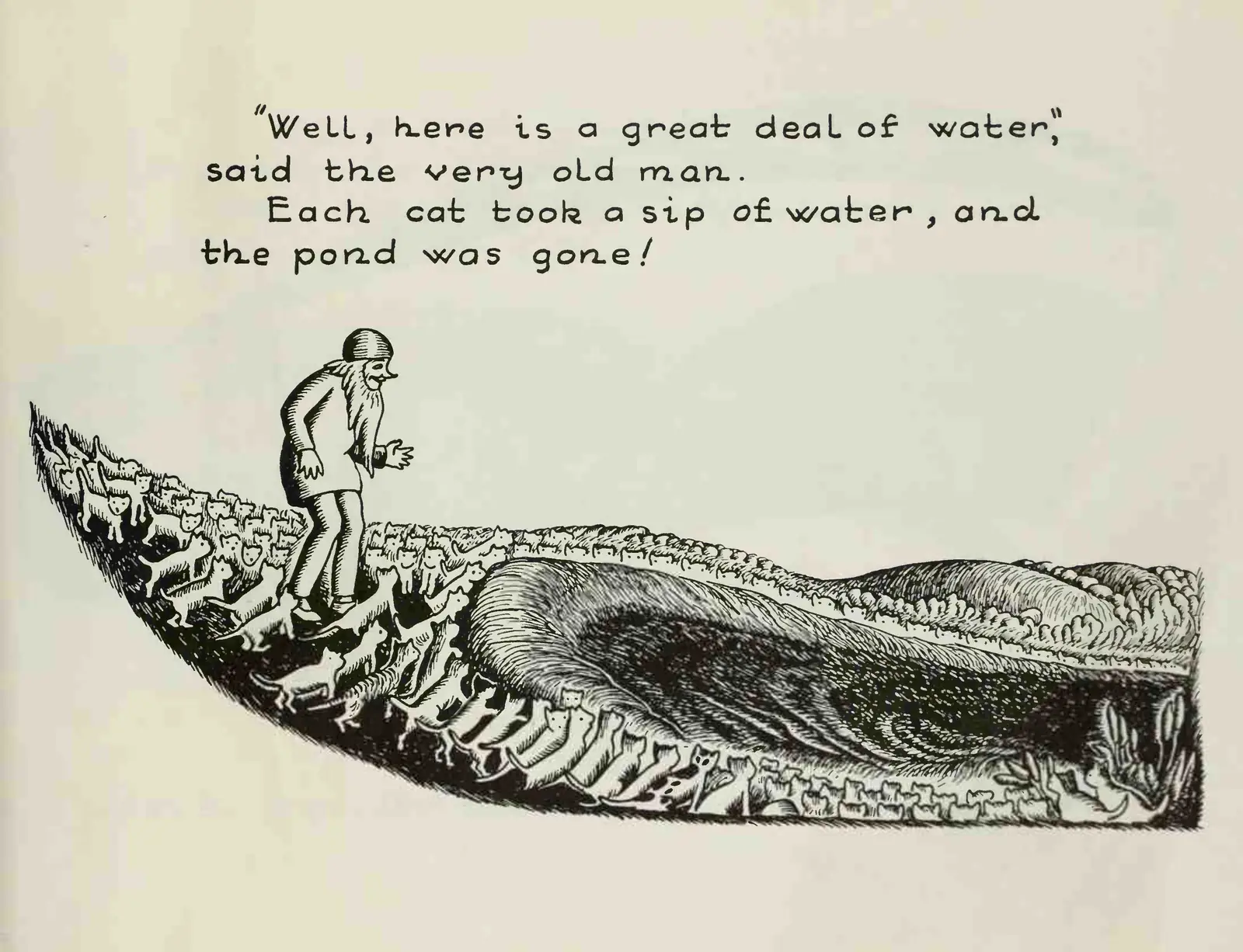
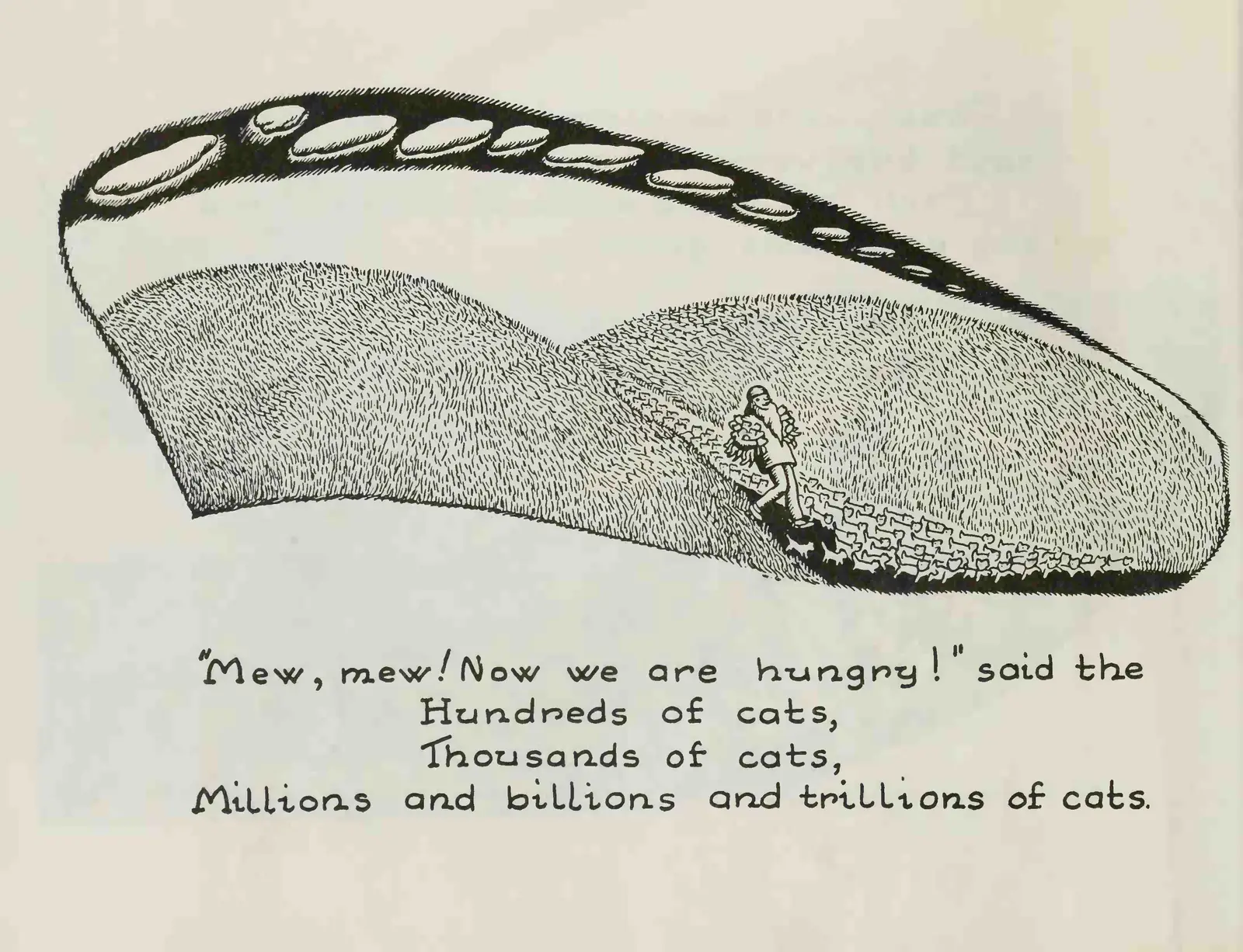
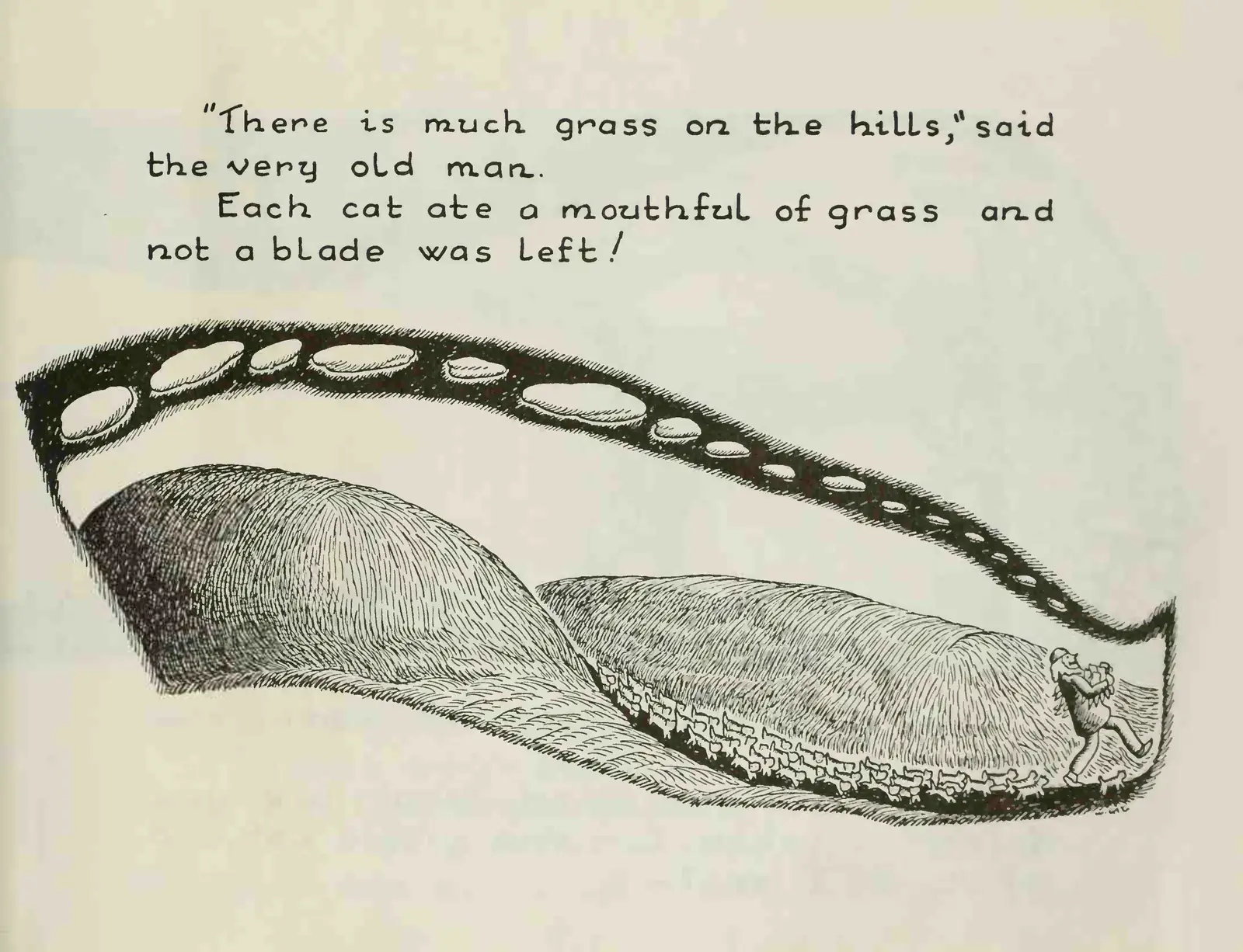
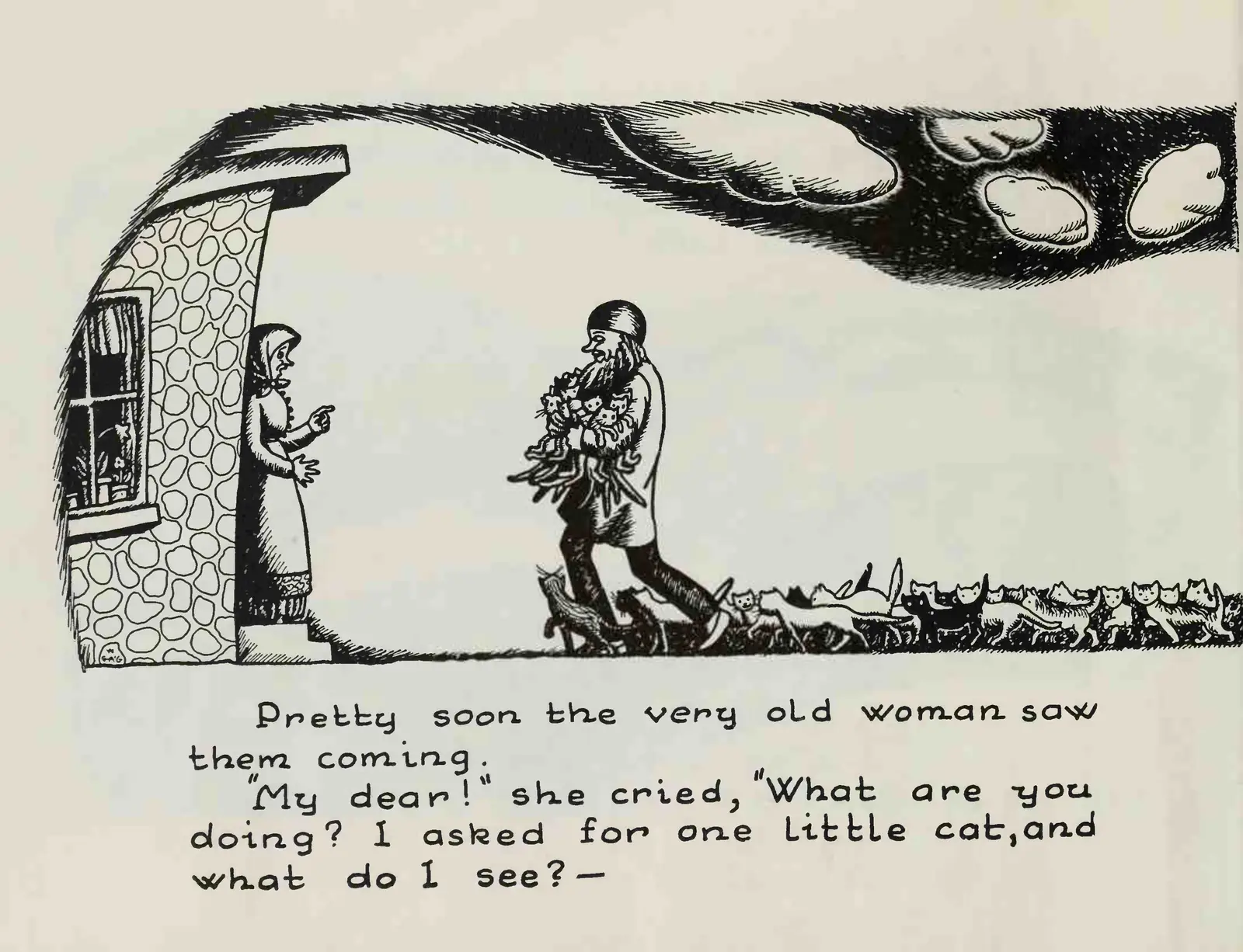
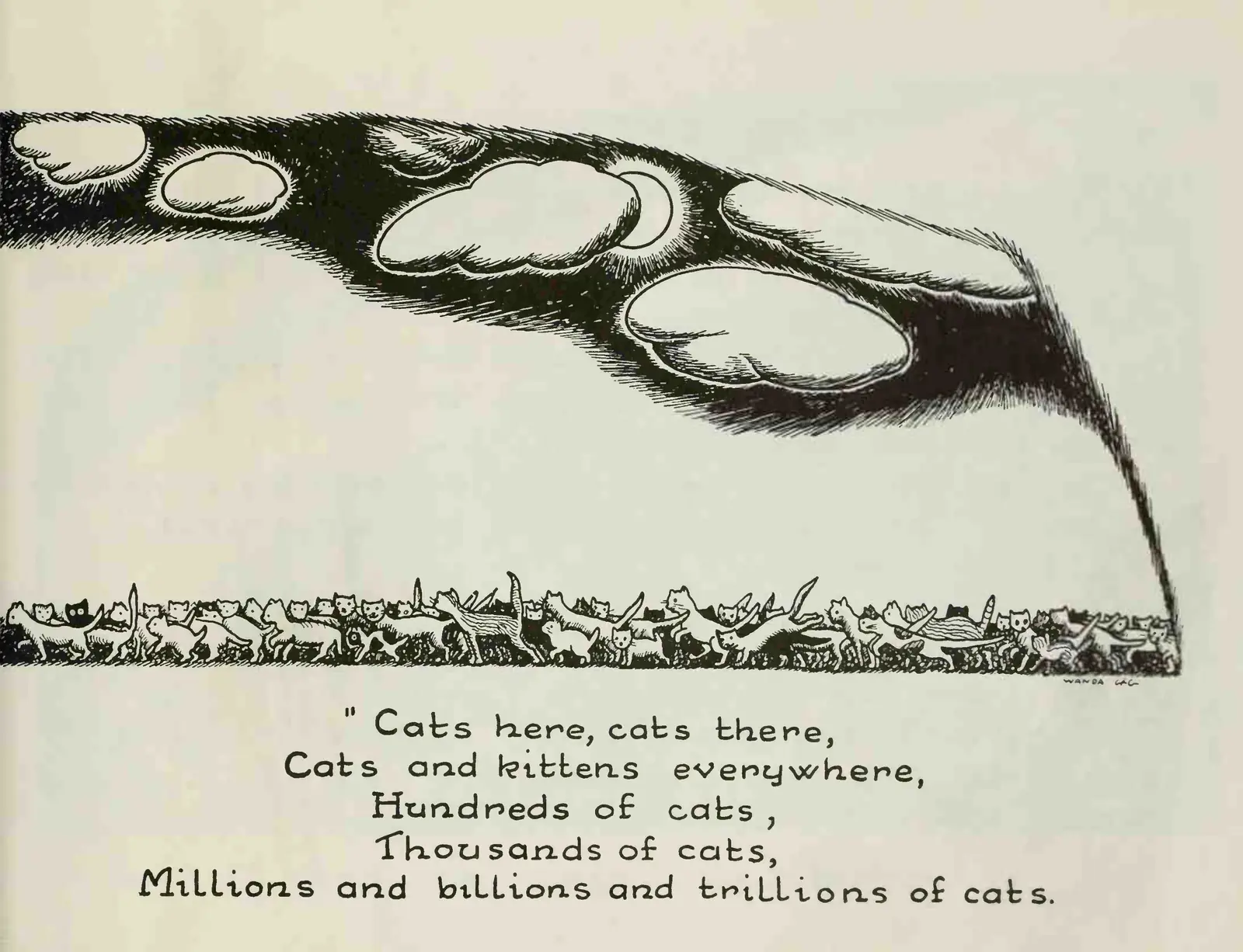
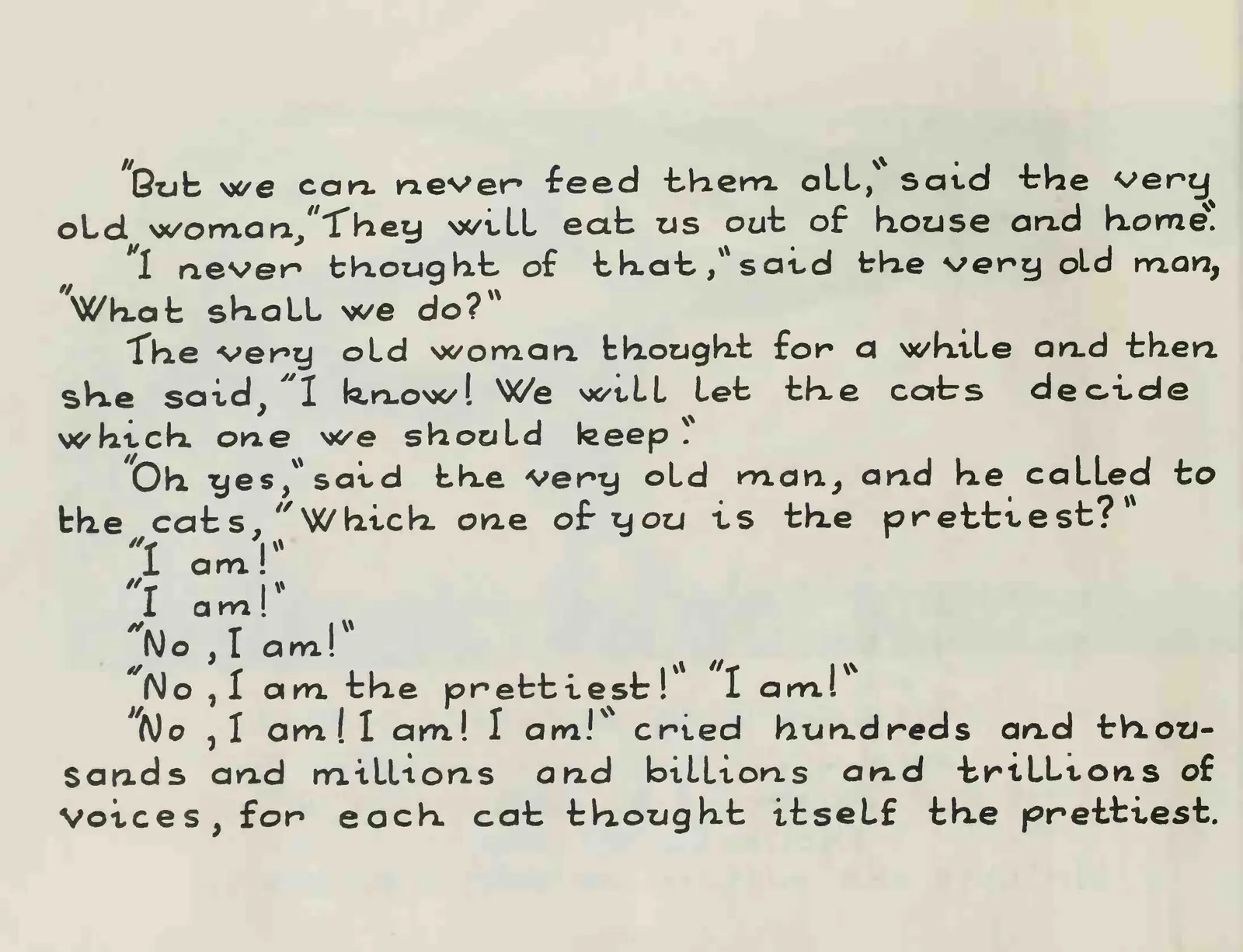
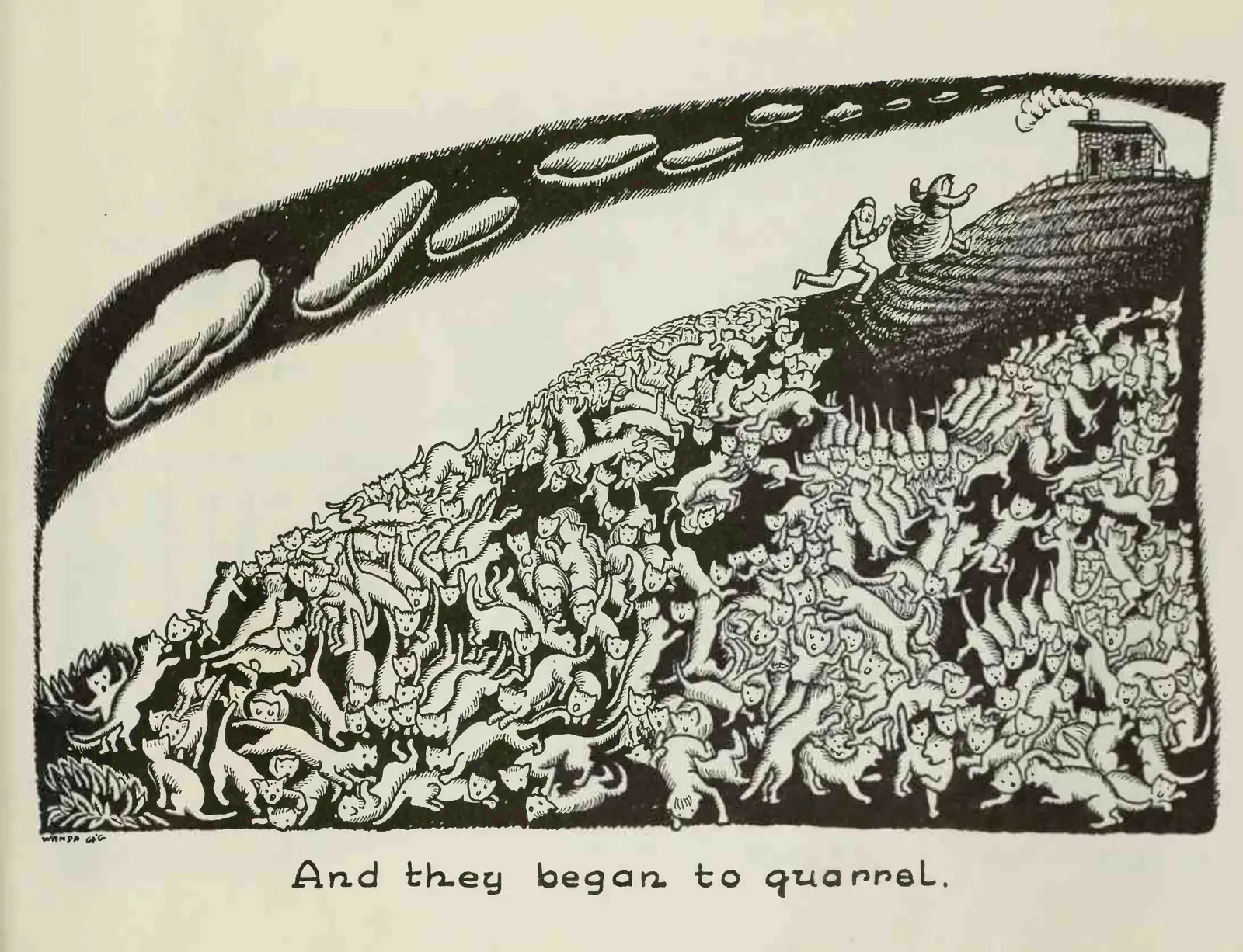
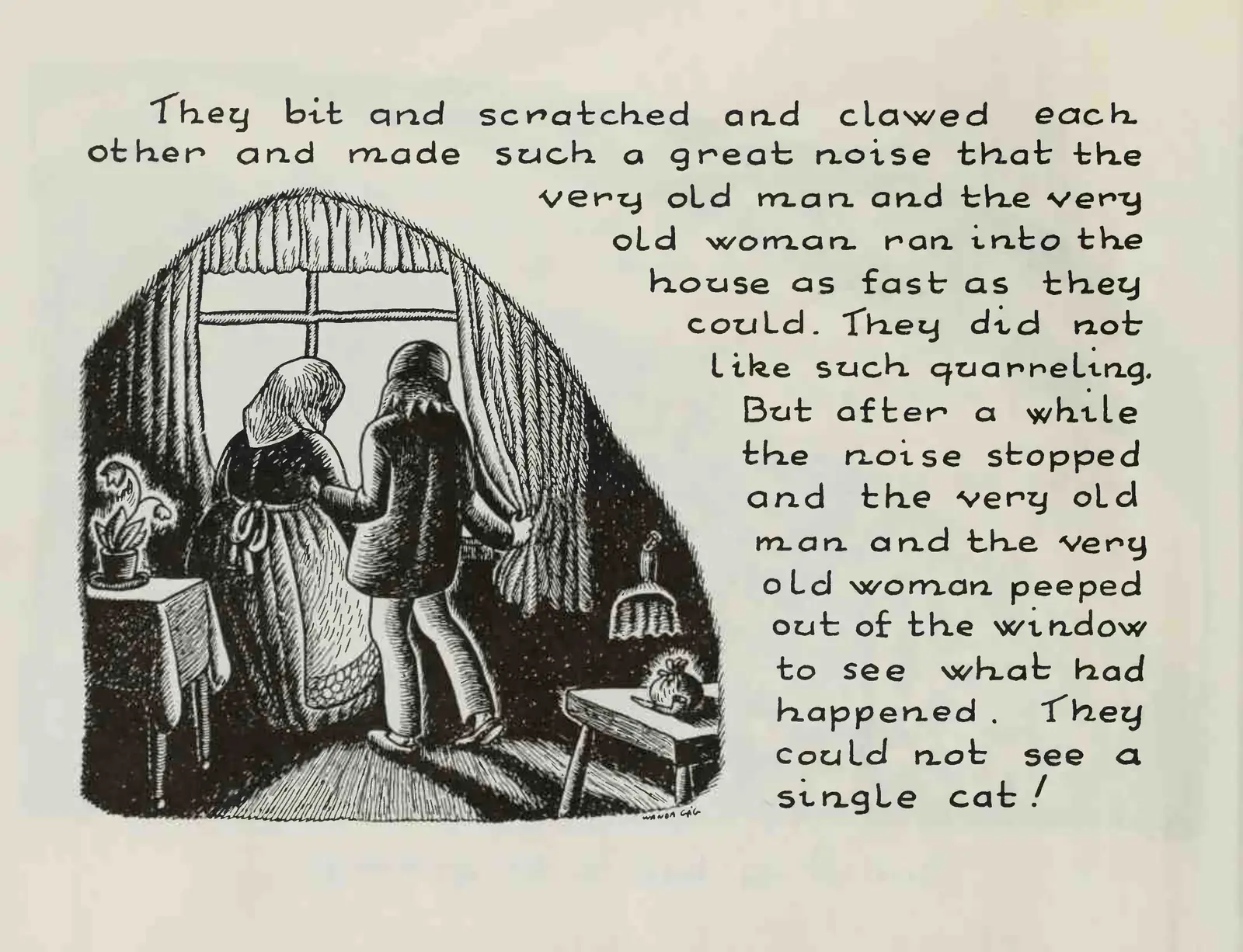
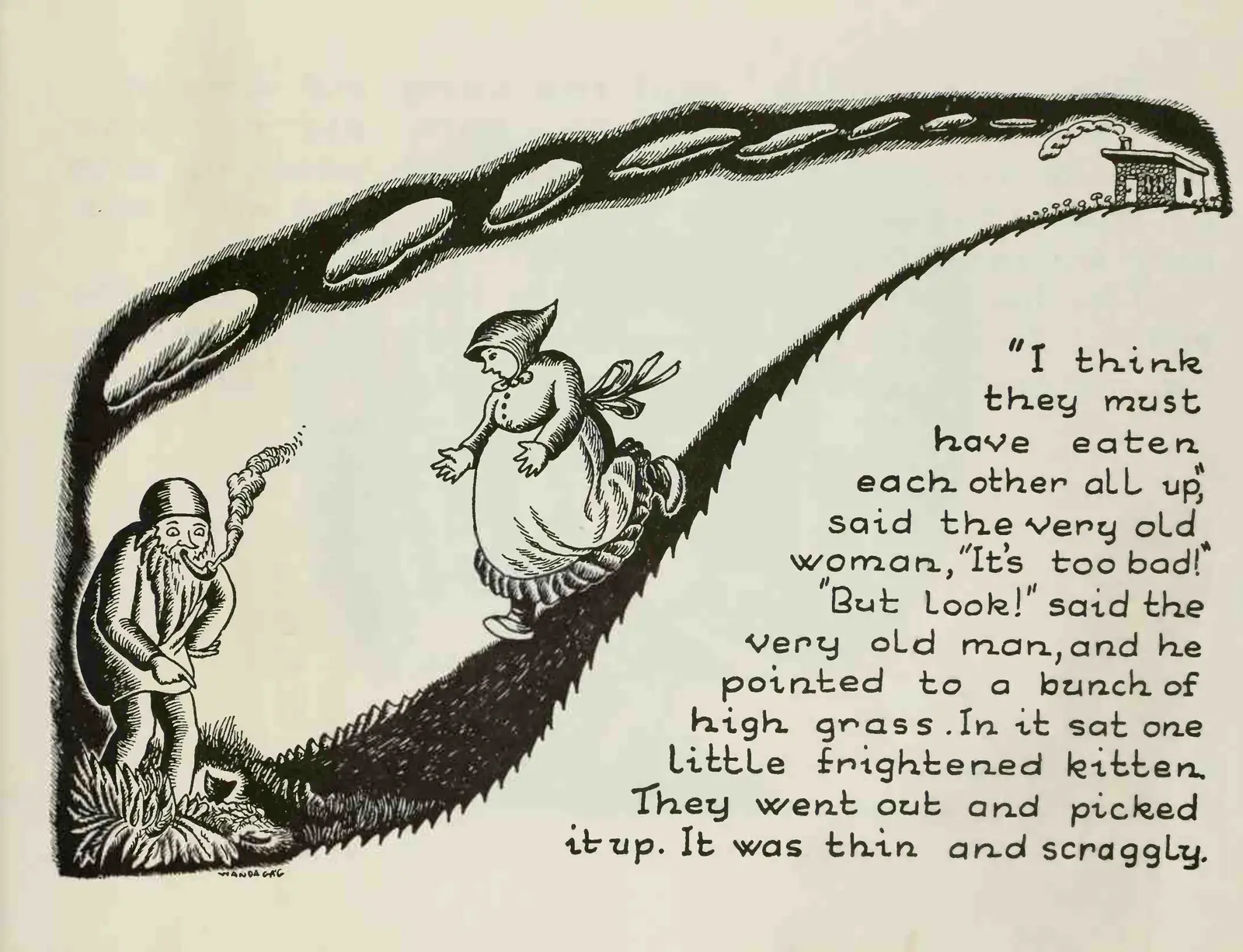
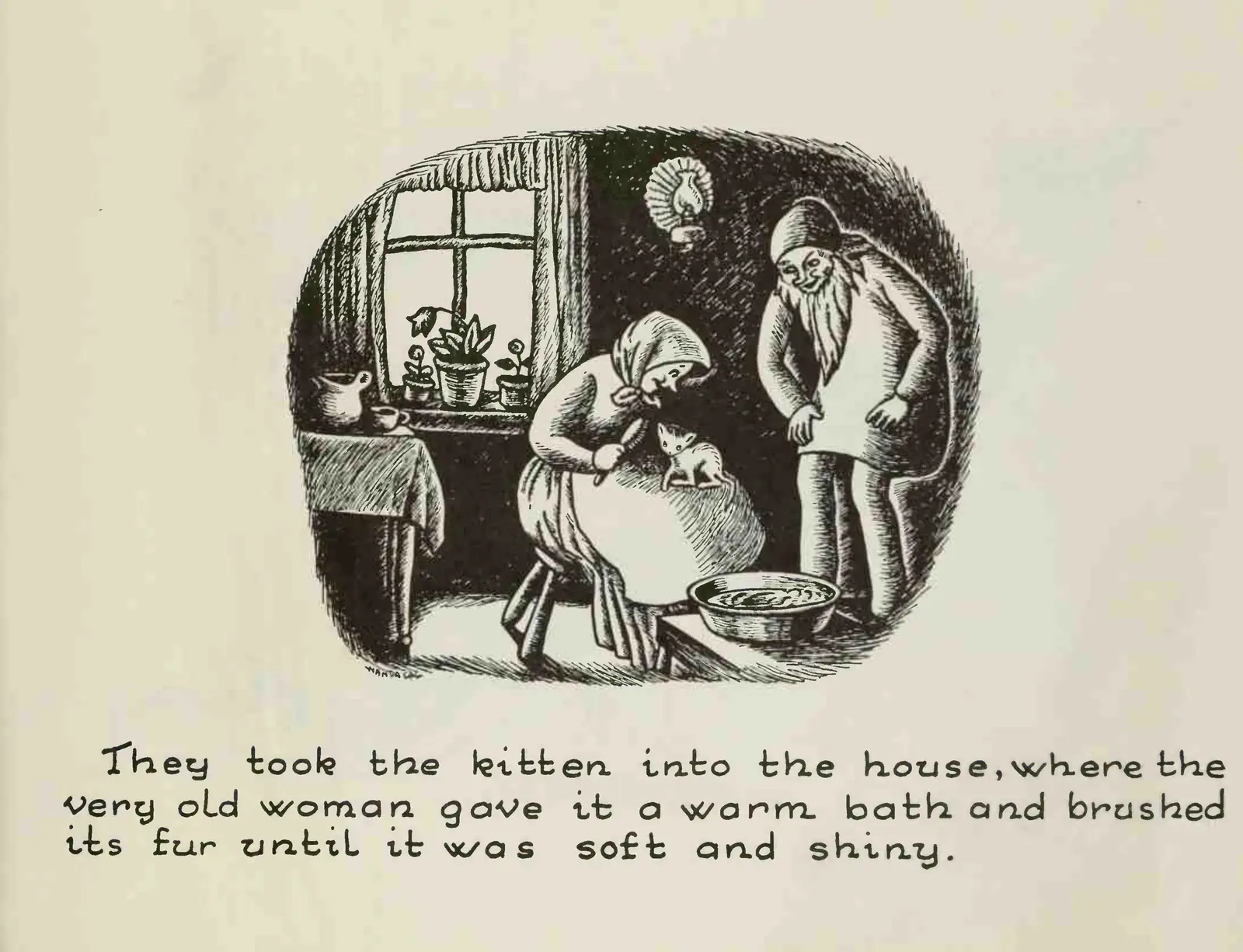
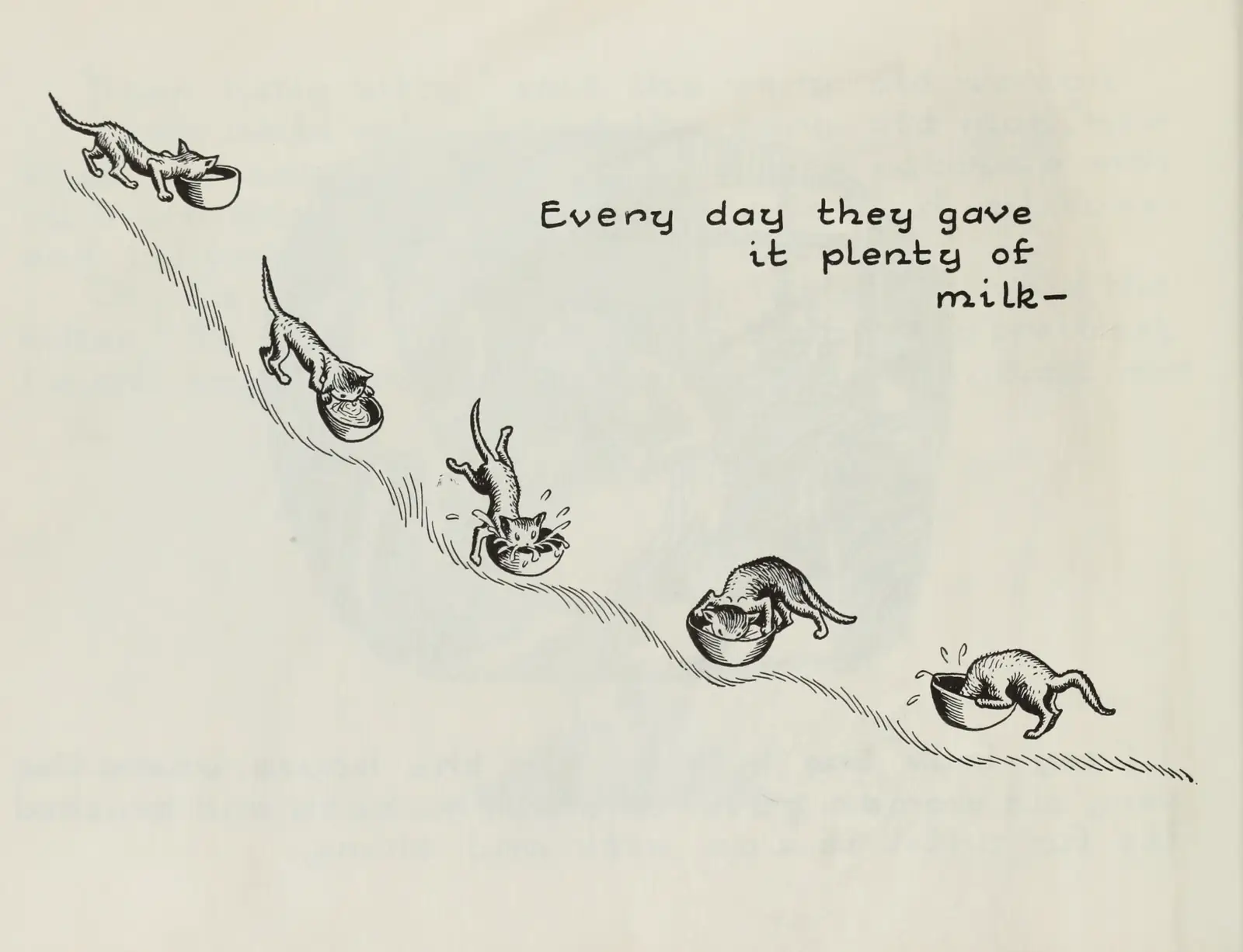
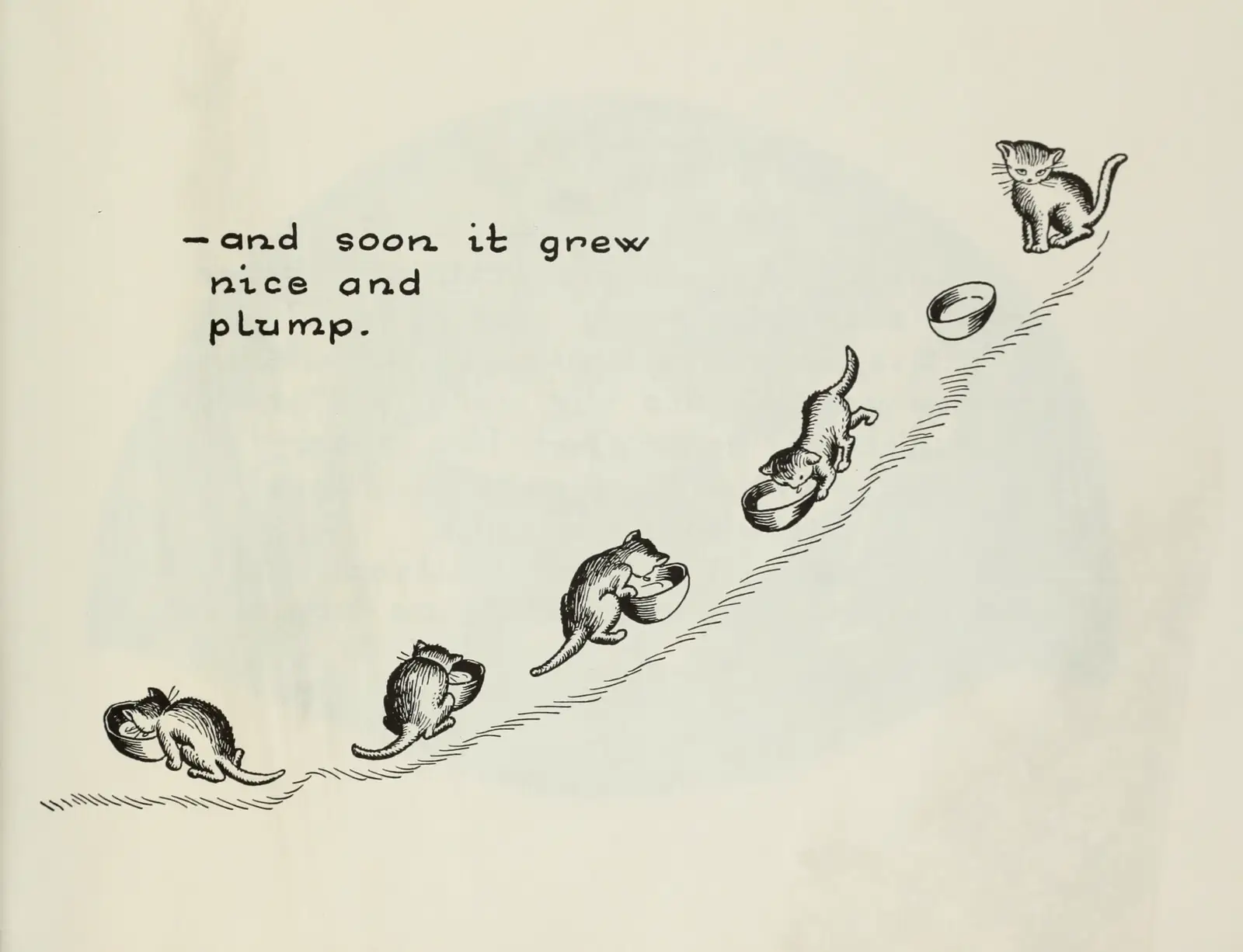
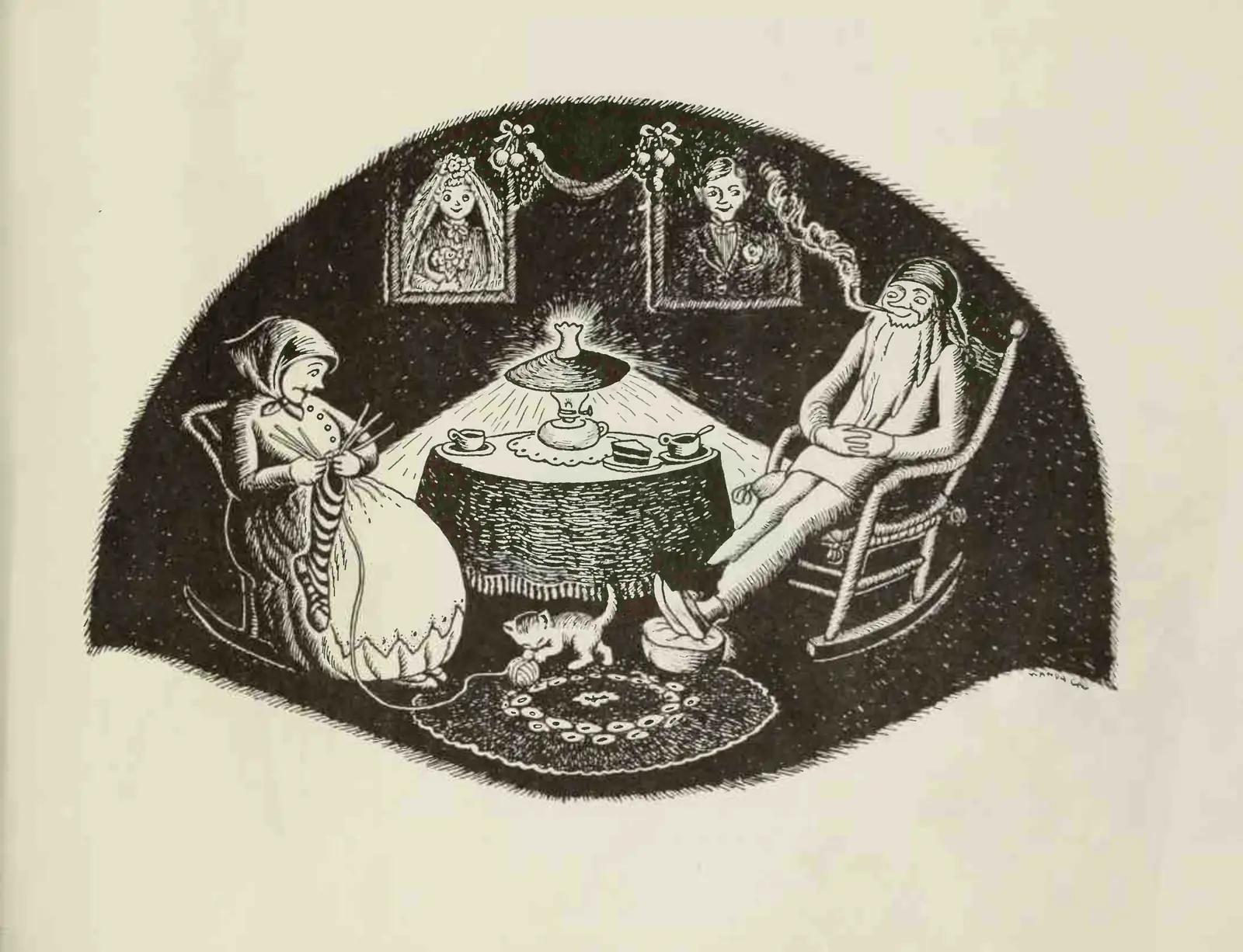
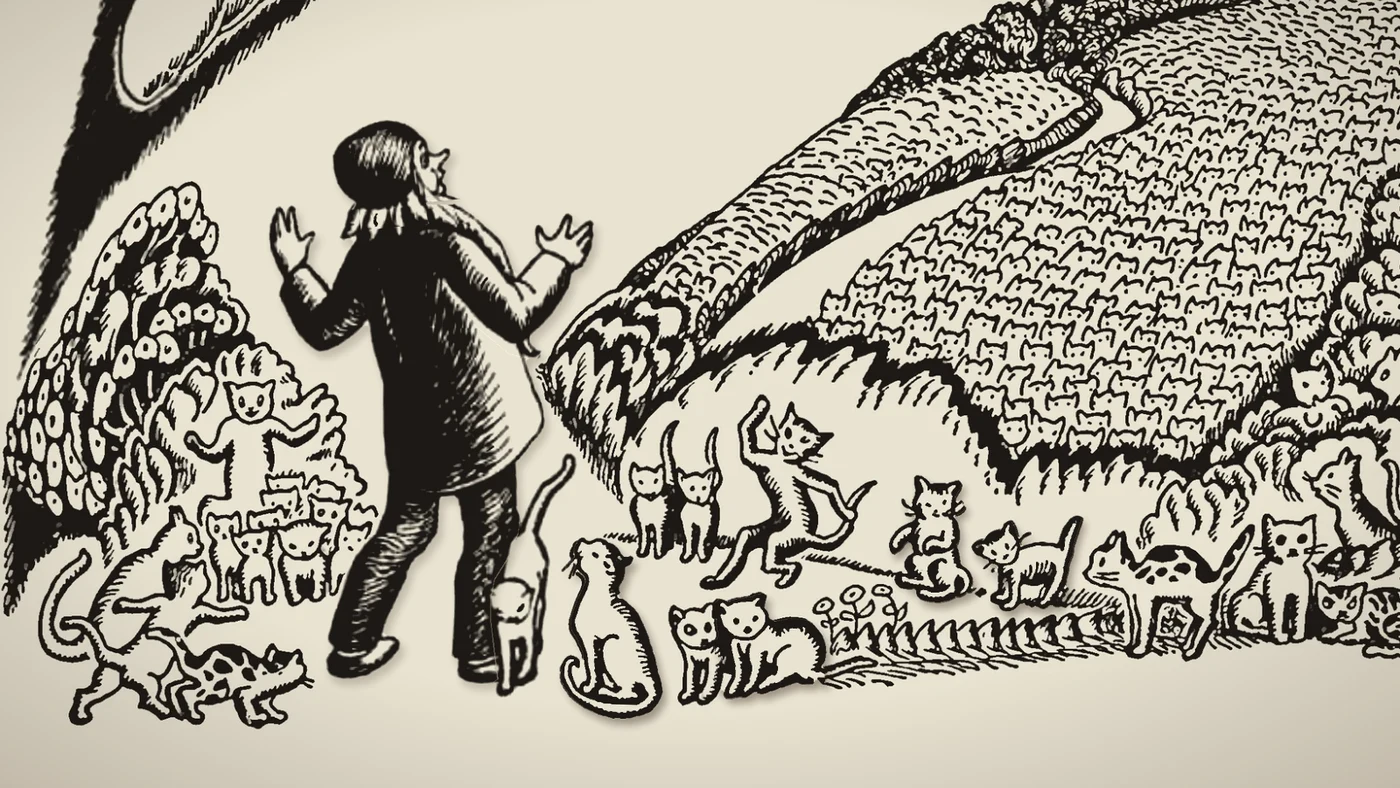
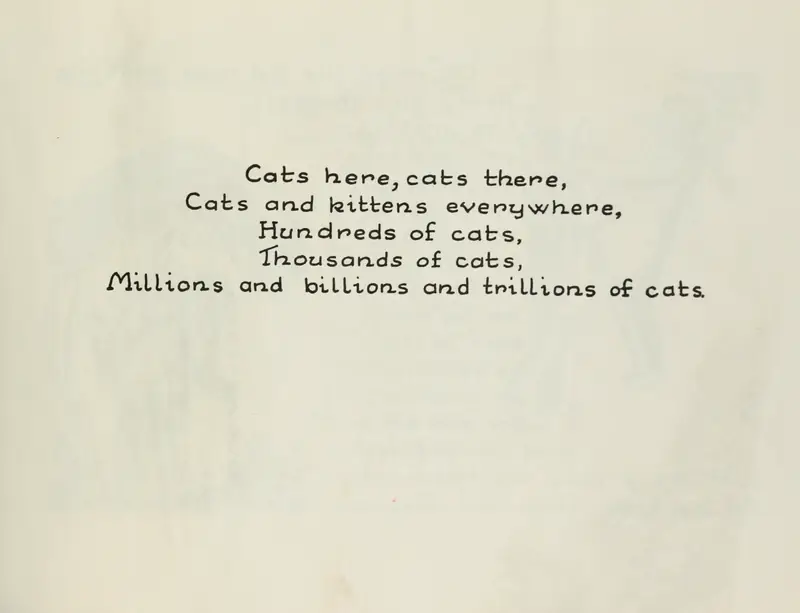
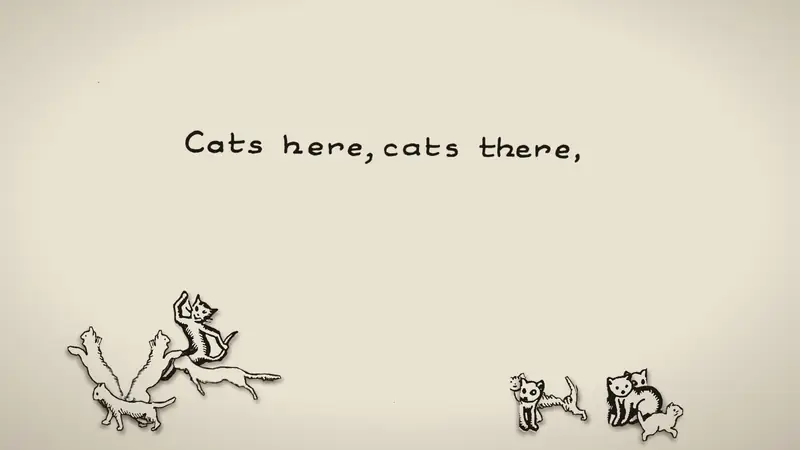
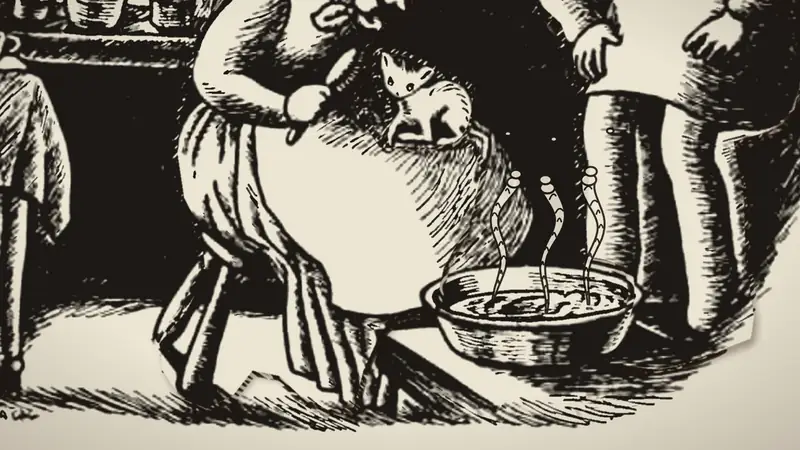
Nothing in this film was drawn for it from scratch. Every set, every figure and the hand lettering of the refrain come off the pages of a scan of the 1928 book: each figure is cut out of its page along Gág's own lines, and the page under it becomes the set. The words are hers too, nearly all of them: one sentence is left out ("They did not like such quarreling.") and most of the "said the very old man"s, since the voices say who is talking.
Paper puppets
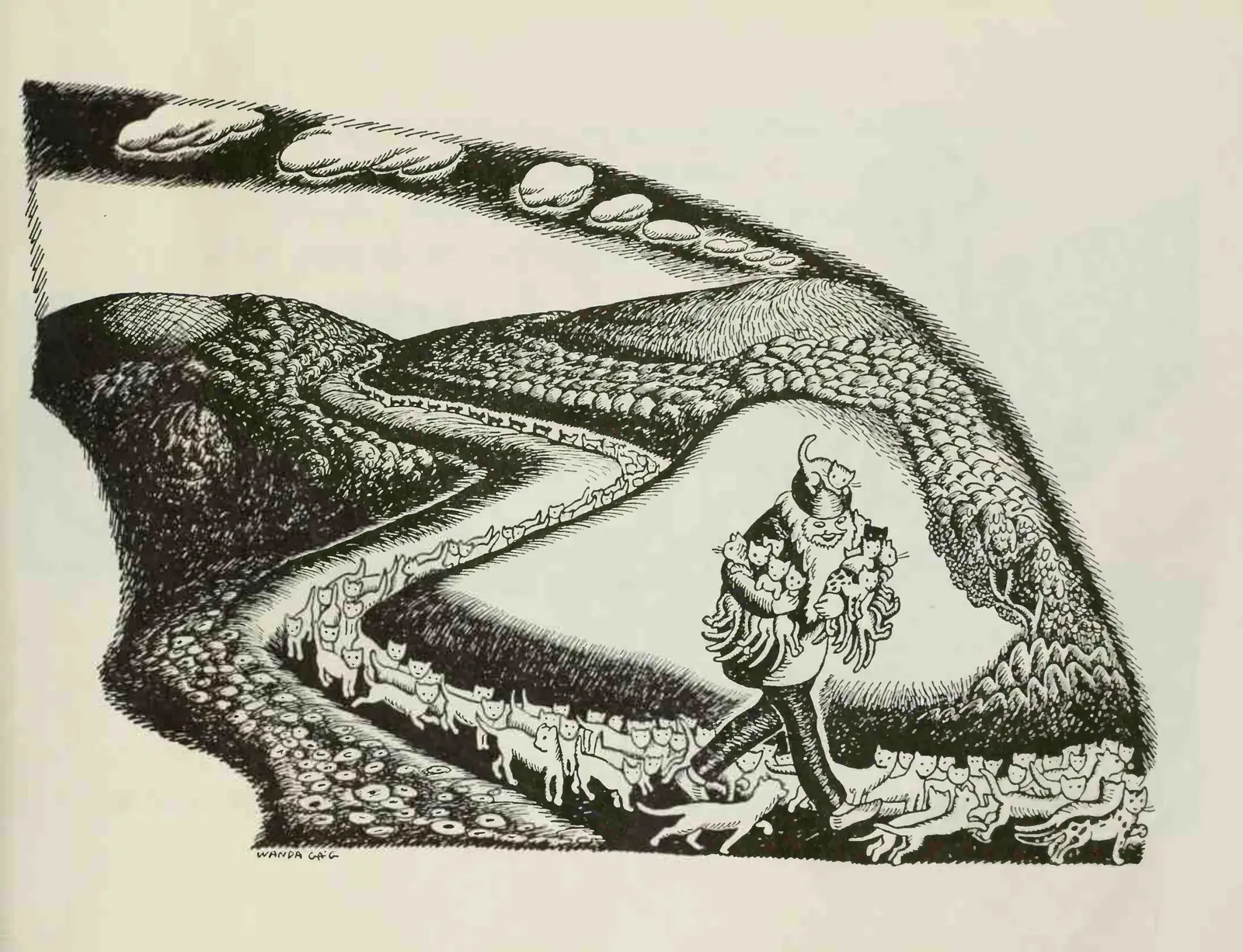
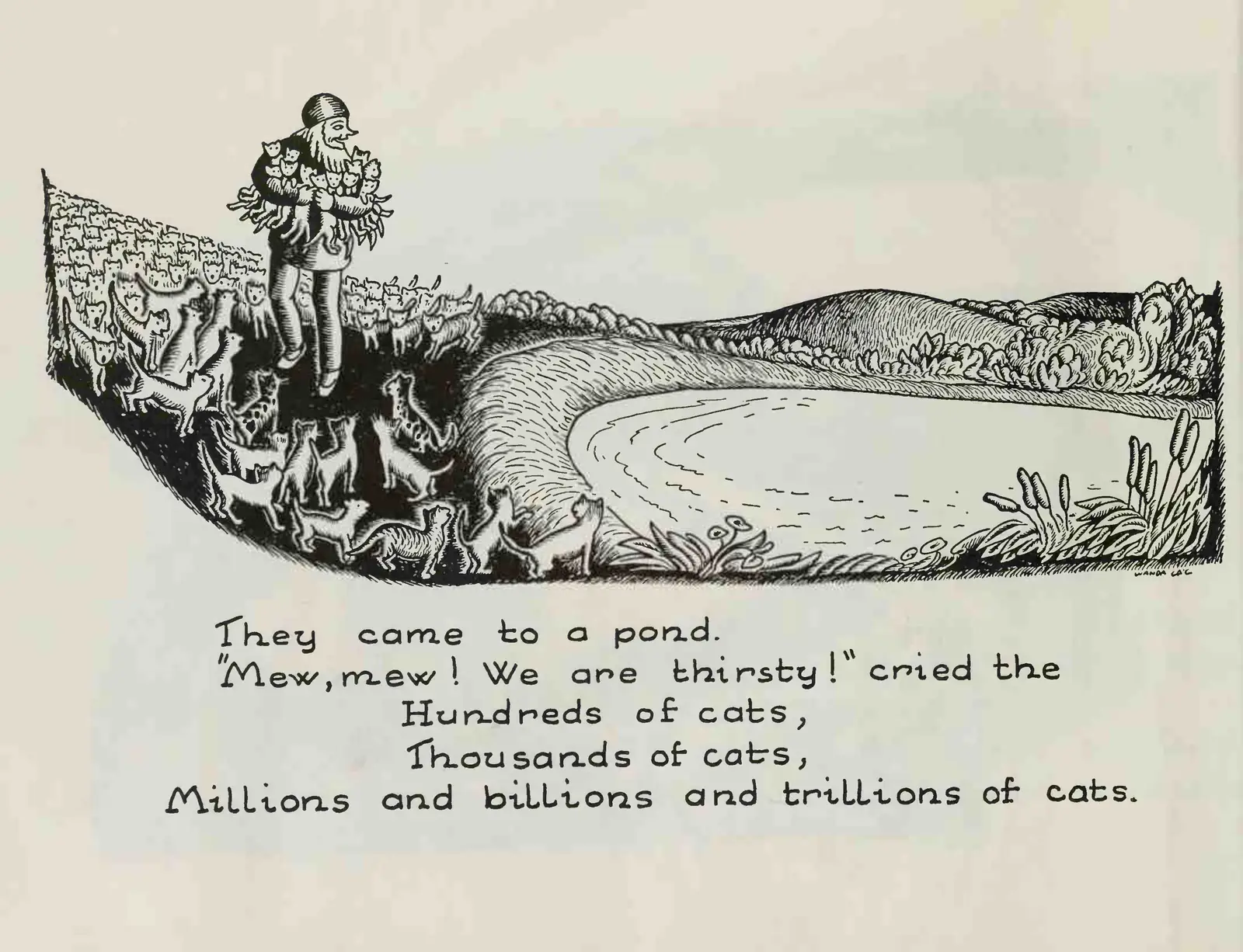
The lifted figures are cut again into parts, a head, an arm, a tail, and pinned at the joints, so the very old man can lift his arms, bend for a kitten and walk the hills, and the very old woman can brush and point. The page itself moves where the story says it changes: the pond the cats drink dry and the grass they eat are separate layers that go away bit by bit. What the pages never show in motion, the curl of smoke from his pipe and a cat walking on four legs, is drawn in code in black ink and cream, to sit in Gág's line.
Where an image model came in
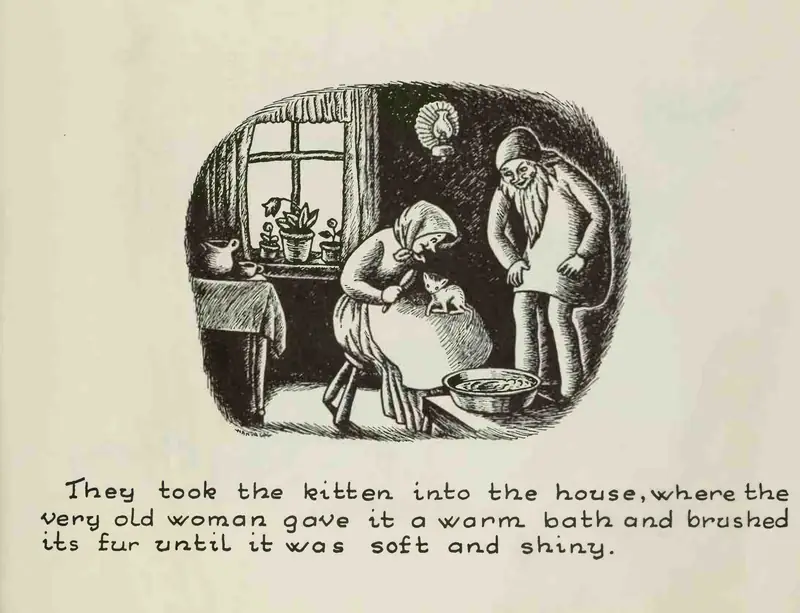
Only to fill holes. When a figure is lifted off a page, there is nothing behind it: the book never drew the wall behind the old woman or the grass under the old man's feet. Those holes were filled by an image model, asked to continue the hatching around them, and each patch was pasted back only inside its hole, so the rest of every page is Gág's own print. That took 21 low-quality pictures, some of them second tries, for $0.43.
Voices, music and sound
Eight ElevenLabs voices: a narrator, the very old man, the very old woman, the homely kitten, and four voices pitched up and doubled into the crowd of cats ("I am!" "No, I am!"). Every word is timed, and the times drive the captions and the refrain's letters. The music is an original waltz composed in code for this film, with a slower night version for the evening at home; the mews, the purr, the wind in the grass and the rest of the sounds are synthesized too.
Listen and find
Once, after the quarrel, when the two old people come out and find no cats on the hill, the film waits for a child. The very old man asks for the house, then a cloud, and last for the little kitten hiding in the high grass; finding it takes the story on.
The numbers
Read the book
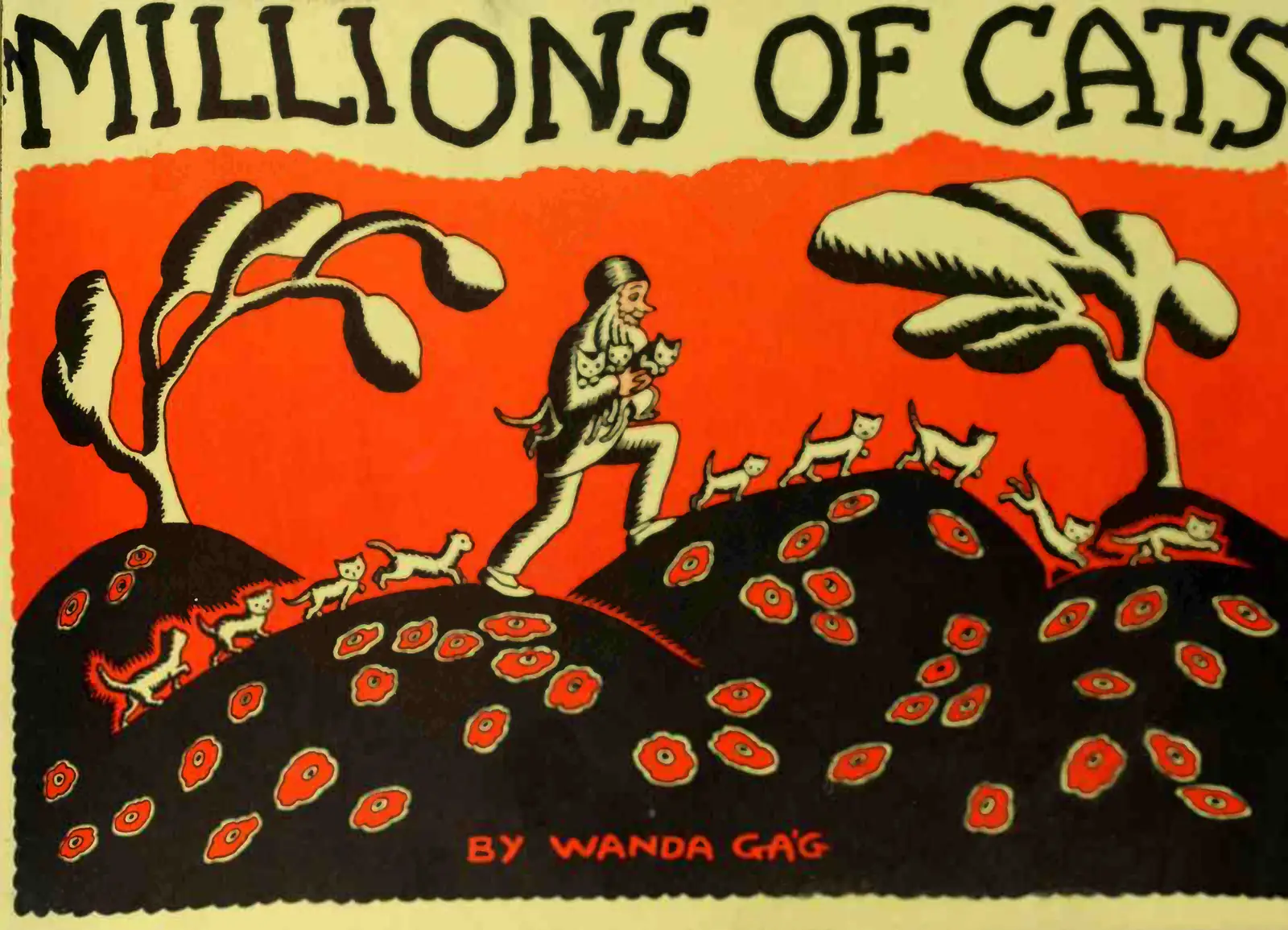
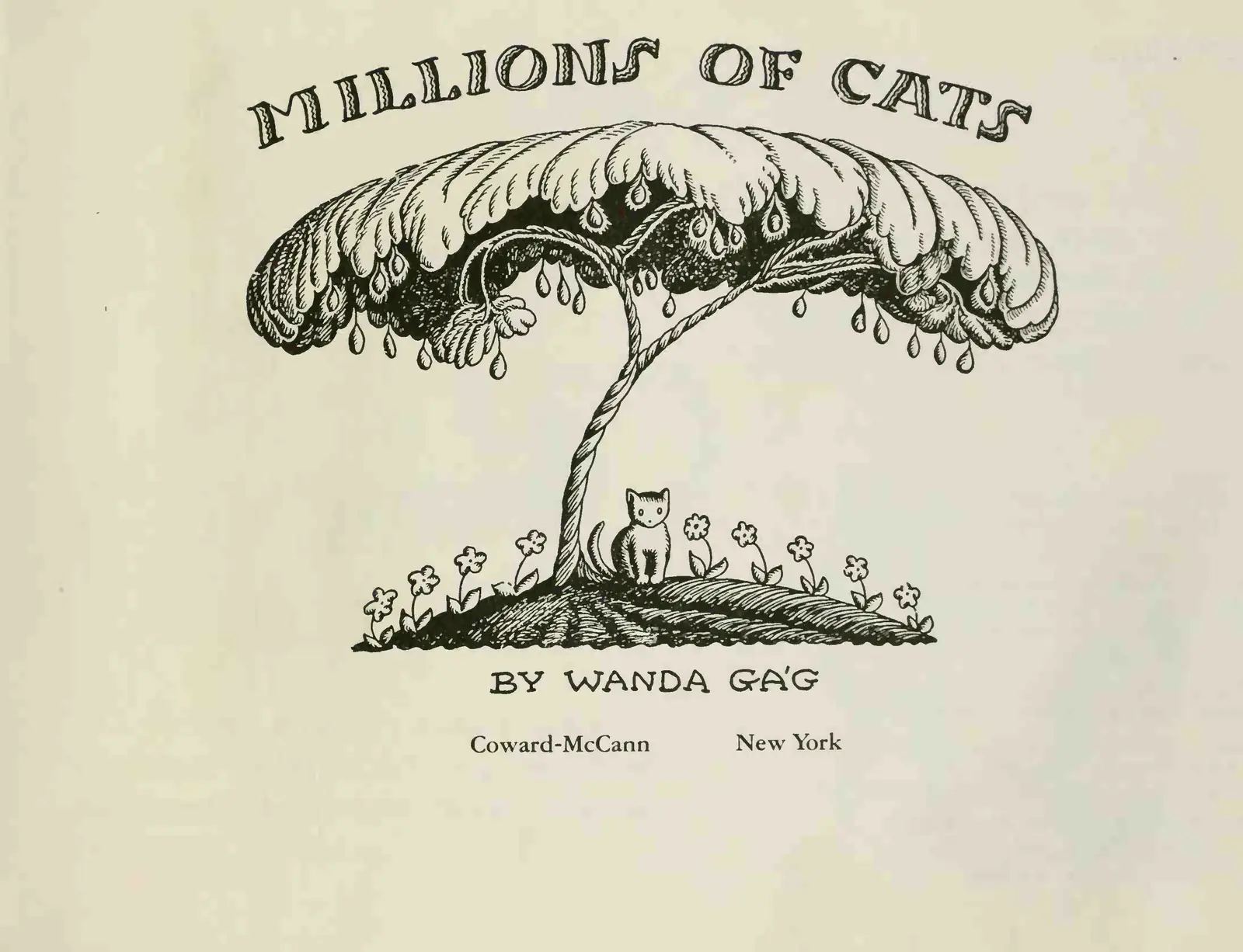
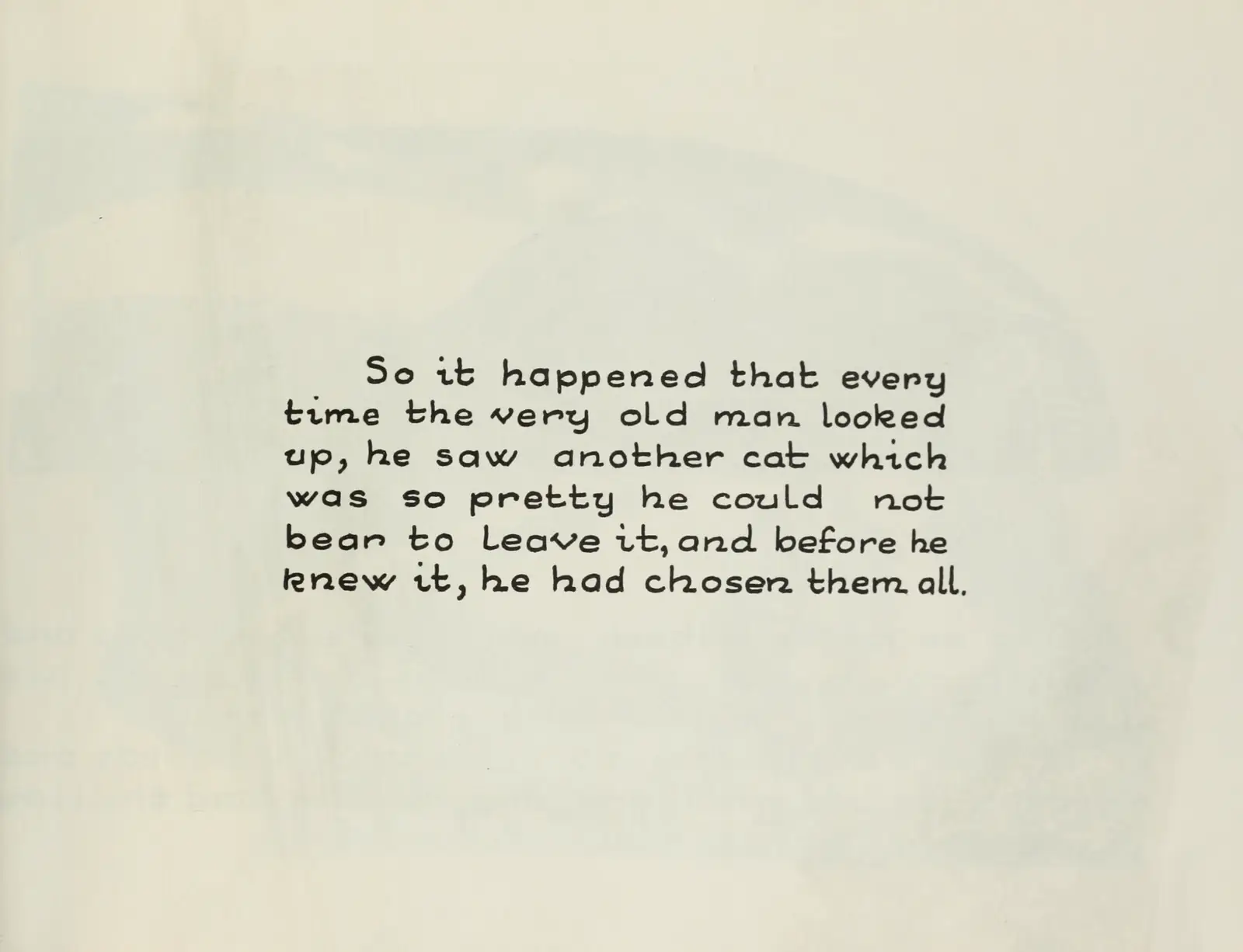
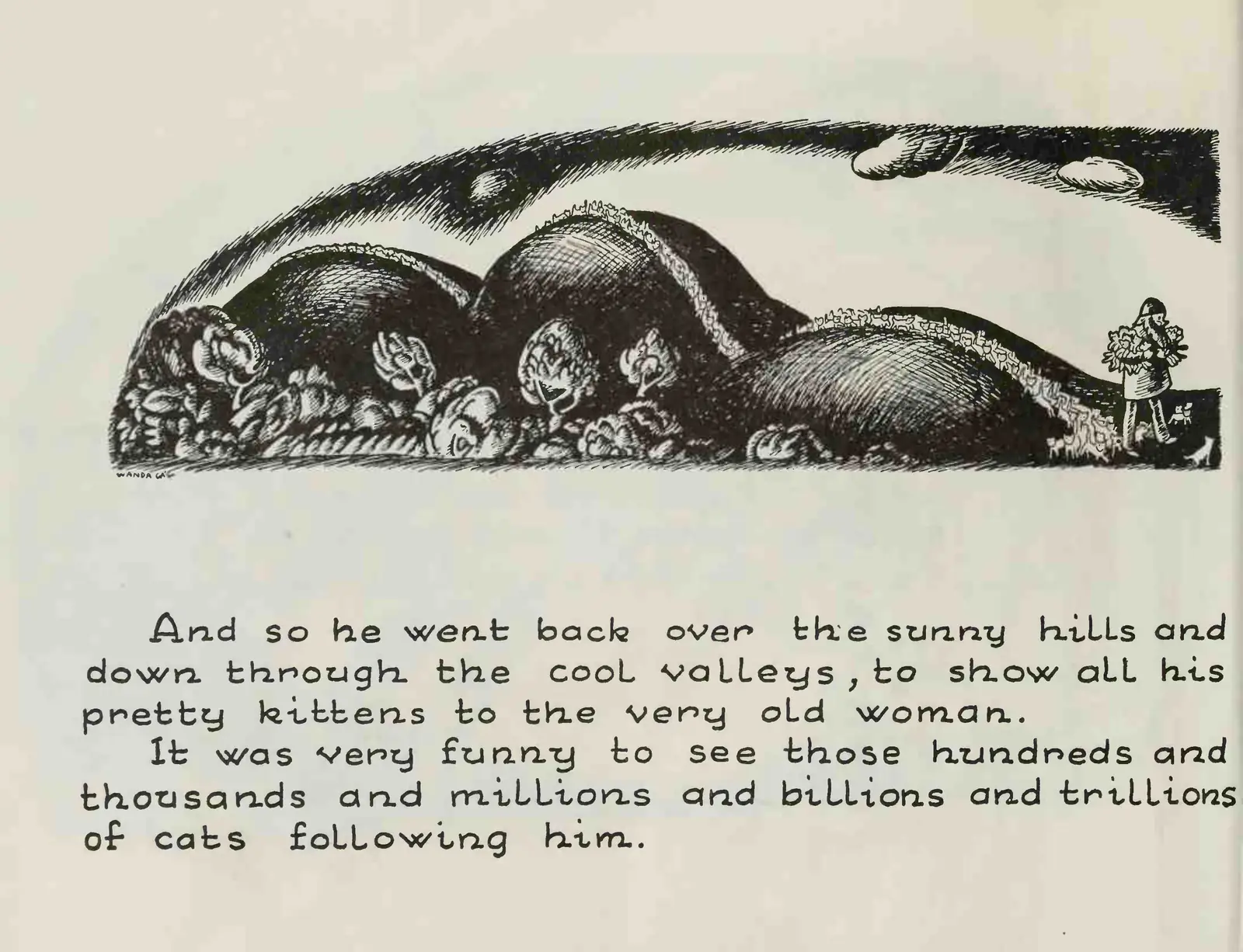
Wanda Gág, Millions of Cats (Coward-McCann, New York, 1928), in the public domain in the United States. These are the pages of the 1928 book, cover to end, from the scan at the Internet Archive; pages a later printing added (blurbs, the copyright page, a note on the author, the back cover) are left out.