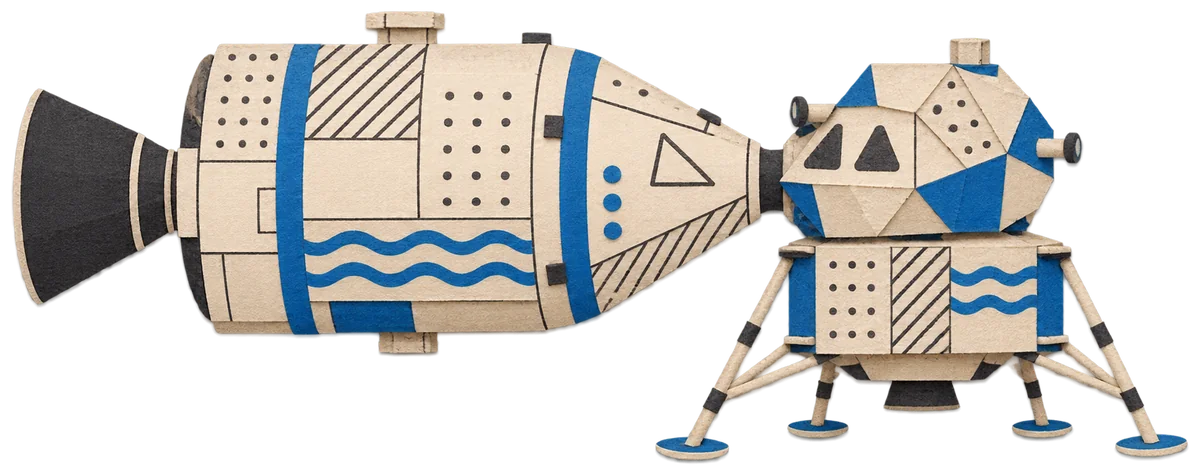
A cut-paper model of the Apollo 13 spacecraft: the command and service modules docked nose to nose with the lunar module Aquarius.

One article, four shapes

A film, three shorts, a page to explore and a scroll story, all from one Wikipedia article.

The source

Everything starts from one article: “Apollo 13” on English Wikipedia, pinned to revision 1386441839 of 18 November 2026 and shared under CC BY-SA 4.0. The pictures and the radio recordings are NASA’s own, in the public domain.

Before anything was made, 25 events of the mission were each traced from the article’s sentence to NASA’s papers: the Mission Report of September 1970, the air-to-ground transcript and the Apollo Flight Journal. Where they disagree, all four shapes follow NASA.

Four shapes

The same facts, pictures and credits go into all four. What changes is the pace, the frame, and who is in control.

The documentary

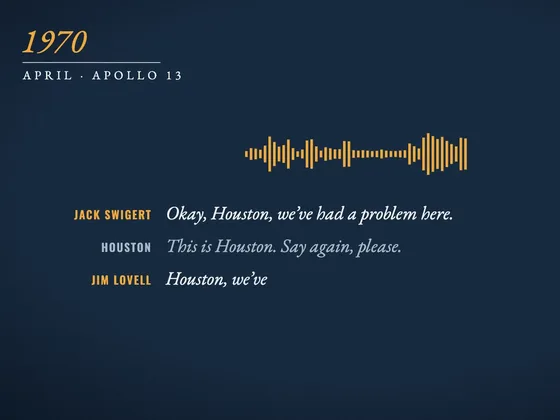
To watch, start to finish. It opens on nine seconds of the real air-to-ground recording, then a narrator tells how a Moon landing became a rescue.

Pace
The film’s: 4.6 minutes
Frame
A wide screen, narrated, with captions
Control
Play and pause

Three upright shorts

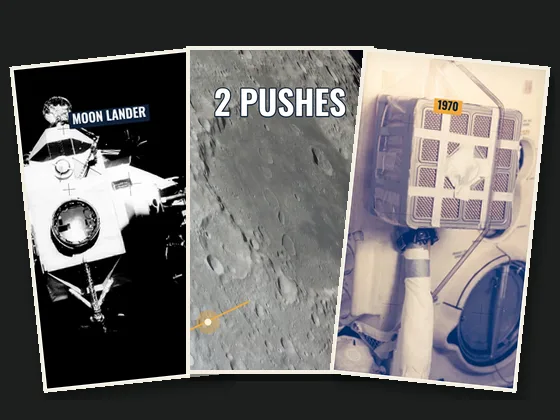
For a phone feed. Each makes one point and stands on its own: the lander that became a lifeboat, the two engine pushes, the square filter made to fit a round hole.

Pace
1:34, 1:24 and 1:32, each under 100 seconds
Frame
Upright, narrated, big labels and close crops
Control
Play; each episode leads on to the next

The Earth-Moon path

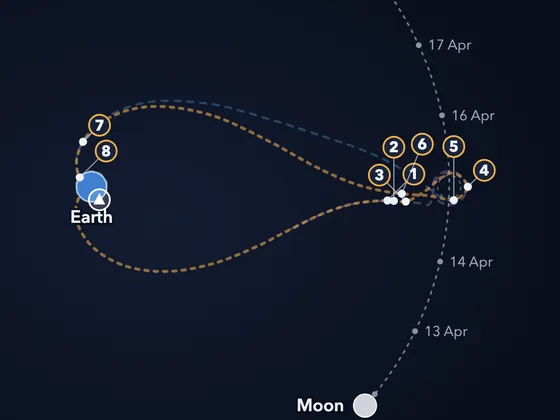
To find out what happened where. The reader drags the mission clock, or presses Play, along a drawn path around the Moon and home, and opens each stop for its pictures and its source.

Pace
The reader’s: 8 stops
Frame
A labelled drawing, not to scale; the real recordings when the reader asks
Control
The reader drags, stops and compares three paths

The scroll story

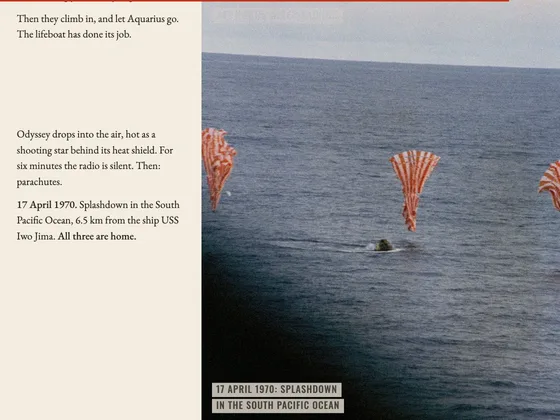
To read at your own speed. Words on one side, and a picture that changes as you scroll: the launch, the broken ship, the fix for the air, the splashdown.

Pace
The reader’s: 20 steps
Frame
Text beside NASA photographs and four drawings
Control
Scrolling sets the pace; scroll back to rewind

One ledger of facts, four tellings. A film decides when you see each thing; a page to explore lets you decide; a scroll story sits in between.

How it was made

The research and all four shapes were made over two days, 27 and 28 November 2026. Codex, OpenAI’s coding agent, gathered and checked the research: it pinned the article, traced the 25 events to NASA’s papers, and collected the pictures and recordings. Claude, Anthropic’s model, made the four shapes from the Papermorph Skill and that checked research. Codex reviewed every change.

The documentary and the shorts were exported as video and watched by a fresh Claude, with no memory of making them, as a director; its notes were fixed. Then a person watched every shape and approved it before it went on the shelf.

Make your own

One source can take several shapes. Any article, chapter or story you have the rights to can go the same way.

With the Skill

Papermorph is an open-source (MIT) Claude Code Skill. Give it your text and it plans, writes, voices and builds the pages, asking you along the way.

Get it on GitHub

Built for your titles

For publishers, schools and studios: we make your books into these shapes, in your own style, or set up the pipeline for your team.

Work with us